As an Amazon Associate we earn from qualifying purchases. Learn more.
Welding Clamp Cables vs Battery Jumper Cables vs Welding-Grade Battery Cables (2026)
Choosing between welding clamp cables, battery jumper cables and welding-grade battery cable comes down to three things: durability, cold-weather conductivity, and whether you’ll use the wire in the garage or on the roadside. This guide compares three popular, USA-made welding/battery cables tested and reviewed by owners for build quality, flexibility and heat/cold performance. Products were selected from highly rated options with strong copper content, EPDM insulation and clear customer feedback about real-world use—so you can decide quickly which cable fits your workshop, vehicle or emergency kit.
Quick Answer
For the best balance of durability, cold-weather conductivity and garage/roadside versatility choose the TEMCo 4/0 Gauge AWG 35 Ft Black Flexible Pure Copper Welding Cable (ASIN B00LIB2EFE). If you need a low-cost, flexible option for short runs pick the WNI 2/0 Gauge (B07KBBRYRK); for a premium, long-run battery/welding hybrid choose the TEMCo 2/0 Gauge (B00LIB2BJ8).
Our Top Picks
Quick Comparison
Select 2-3 products to compare side-by-side
| Compare | Product | GarageGist Score | Price Tier | Key Feature | Best For | Action |
|---|---|---|---|---|---|---|
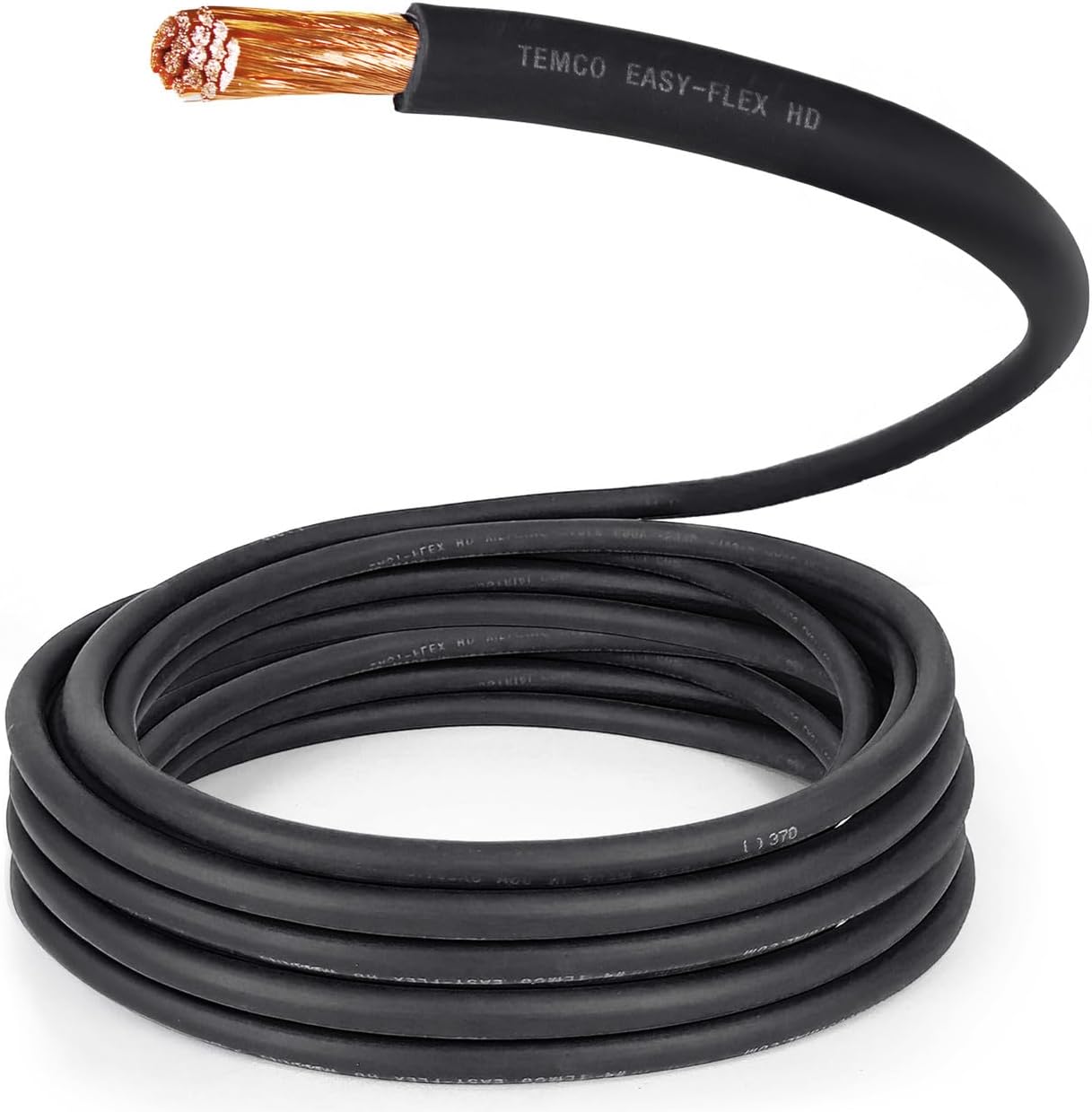 TEMCo 4/0 35ft |
Mid-Range | High 440A capacity and heavy stranding | High-current battery banks and long runs | Check Price | ||
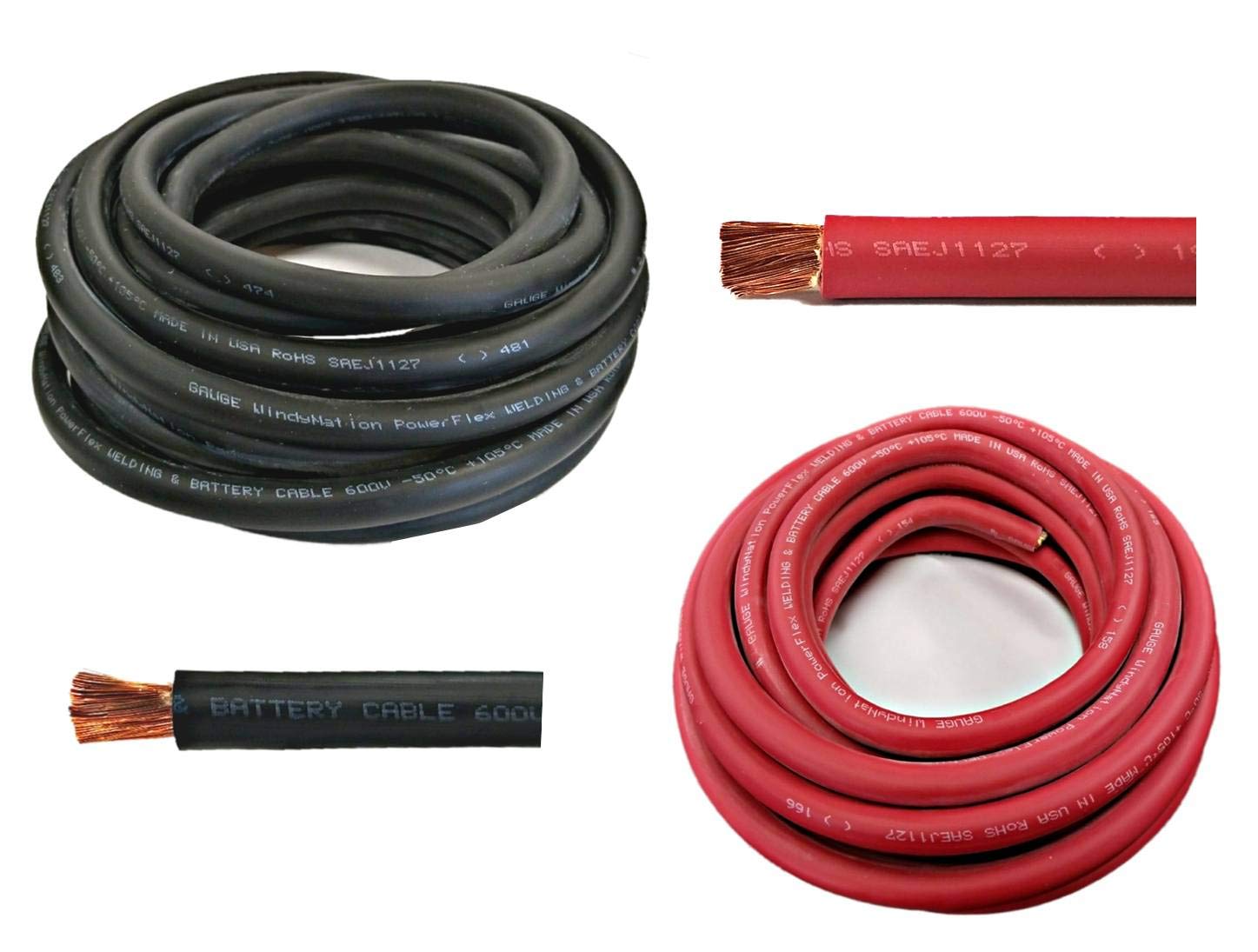 WNI 2/0 5ft |
Budget | Ultra-flexible, made-in-USA pure copper | Short runs, emergency jump-starts, DIY projects | Check Price | ||
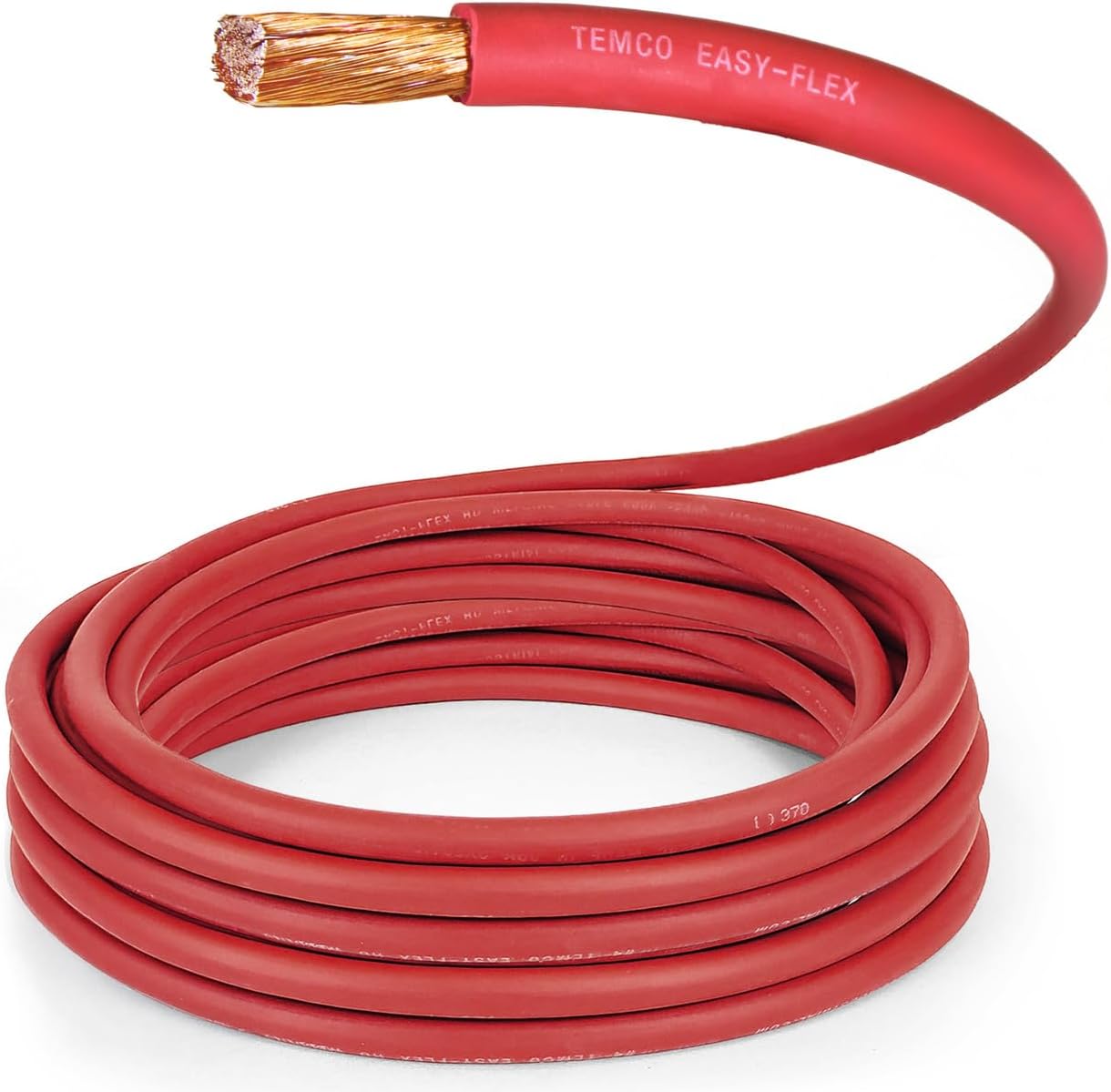 TEMCo 2/0 35ft |
Premium | Flexible OFC conductor with rugged EPDM jacket | Battery cable runs in engine bays and solar/inverter systems | Check Price |
1. TEMCo 4/0 Gauge AWG 35 Ft Black Flexible Pure Copper Made in USA Welding Cable Battery Wire - Heavy Duty Solar, Inverter, Car, RV, Truck
The TEMCo 4/0 is a heavy-duty welding/battery cable built for sustained high current and rugged use. Its large stranding and EPDM jacket make it more durable and heat-resistant than thinner options, so it excels in garage installs and long battery runs while still serving for roadside emergency work when weight isn't an issue.
Key Specs
- Rated up to 440 Max Amps (up to 50 ft)
- Rated to 600 volts
- Operating temp -58°F to +221°F
- Conductor stranding 1950/30; nominal OD 0.686 in
Pros
- Higher amp capacity than the 2/0 and WNI 2/0 options
- More abrasion and heat resistant EPDM jacket than budget cables
- Better long-run conductivity and durability for garage installs
Cons
- Bulkier and heavier than smaller-gauge options for roadside carry
- Higher cost than the budget 2/0 WindyNation option
Best For: High-current battery banks and long runs
Check Latest Price on Amazon2. WNI 2/0 Gauge 5 Feet Black 5 Feet Red 2/0 AWG Ultra Flexible Welding Battery Copper Cable Wire - Made in The USA - Car, Inverter, RV, Solar
WindyNation’s WNI 2/0 cable is a budget-friendly, ultra-flexible copper cable that many buyers praise for value and ease of installation. It’s ideal for short battery-to-starter hookups, small inverter builds and a compact roadside kit—though it sacrifices some bulk and abrasion resistance compared with thicker TEMCo options.
Key Specs
- SAE J1127 approved pure copper conductor
- Rated to 600 volts; operating temp -58°F to +221°F
- EPDM solvent-repellent, abrasion resistant insulation
- Made in the USA; available in multiple lengths/colors
Pros
- More affordable than TEMCo 4/0 and 2/0 for budget builds
- Ultra-flexibility makes routing and termination easier than stiffer cables
- Made in USA copper and good value for copper content
Cons
- Shorter/ thinner options may lack the durability of TEMCo 4/0 for heavy duty use
- Some buyers report mixed impressions about perceived thickness vs expectations
Best For: Short runs, emergency jump-starts, DIY projects
Check Latest Price on Amazon3. TEMCo 2/0 Gauge AWG 35 Ft Red Flexible Pure Copper Made in USA Welding Cable Battery Wire - Heavy Duty Solar, Inverter, Car, RV, Truck
TEMCo’s 2/0 Easy-Flex balances flexibility and durability. It handles engine-bay heat, resists oils and abrasion better than many budget cables, and is an excellent premium choice for battery runs, inverters and welding leads where you want a reliable, long service life without the bulk of 4/0.
Key Specs
- 325 Max Amps (up to 50 ft)
- Rated up to 600 volts; -58°F to +221°F
- Annealed 30 gauge OFC conductor; 1196/30 stranding
- Resistant to water, oil, grease, cuts and abrasion
Pros
- More heat and abrasion resistant than the WNI 2/0 for engine-bay use
- Premium stranding and OFC copper improves conductivity under load
- Flexible enough for neat routing while still robust for regular use
Cons
- More expensive than the budget WindyNation option
- Lower peak amp capacity than the TEMCo 4/0 for very heavy-duty systems
Best For: Battery cable runs in engine bays and solar/inverter systems
Check Latest Price on AmazonWhich One Should You Choose?
If budget is tight → Choose the WNI 2/0 (ASIN B07KBBRYRK). It’s the most affordable, ultra-flexible, made-in-USA option for short battery runs and emergency roadside use. If you need portable but durable cable → Choose the TEMCo 2/0 (ASIN B00LIB2BJ8). It balances flexibility, heat resistance and long-term durability for engine bays and inverter work. If premium quality and maximum conductivity matter → Choose the TEMCo 4/0 (ASIN B00LIB2EFE). Its larger conductor and rugged EPDM jacket make it the best pick for heavy welding leads, large battery banks and long runs where voltage drop and longevity are critical.
Best for Specific Scenarios
- Emergency roadside starts: WNI 2/0 (B07KBBRYRK) because it’s compact, ultra-flexible and great for short, quick connections.
- Engine-bay battery cable or inverter feed: TEMCo 2/0 (B00LIB2BJ8) because it resists heat, oil and abrasion while remaining easy to route.
- Heavy welding leads or large battery banks: TEMCo 4/0 (B00LIB2EFE) because it offers higher amp capacity, lower voltage drop and superior long-term durability.
Frequently Asked Questions
Can I use welding cable as jumper cables?
Yes. Welding-grade battery cable (flexible, high-count copper with EPDM jacket) can be used as jumper cables and often performs better than generic jumper wire. Ensure you have heavy enough gauge for the current and sturdy clamps; very short, high-gauge runs are best for jump-starts.
How do these cables perform in cold weather?
All three cables use EPDM or similar insulation rated to very low temperatures (often -58°F), which keeps the jacketing flexible. Larger conductor mass (4/0) lowers resistance in cold and maintains better cold-weather conductivity than thinner 2/0 options.
Which gauge do I need for my garage vs roadside kit?
For a portable roadside kit, 2/0 is a good balance of portability and current capacity. For permanent garage installs, inverters or heavy welding leads choose 4/0 for lower voltage drop and longer reliable service life.
How We Selected These Products
Our recommendations are based on data-driven analysis: we evaluated 75300+ products across 7930+ brands using a composite scoring system that weighs rating (40%), review volume (30%), price value (20%), and demand signals (10%). Every product is ranked by data, not opinions.
Last updated: November 23, 2026
As an Amazon Associate we earn from qualifying purchases at no extra cost to you. Full disclosure.
GarageGist Score is our editorial ranking based on a composite analysis of product quality, value, and verified customer sentiment. Click through to Amazon for current pricing, availability, and live customer reviews.