As an Amazon Associate we earn from qualifying purchases. Learn more.
Organic vs Ceramic vs Semi-Metallic for Fall Driving (2026)
If you drive through leaf-covered streets and cooler, damp mornings every fall, your brake pad choice matters. This head-to-head guide compares pad compounds (organic, ceramic, semi-metallic) with a focused review of three TRQ semi-metallic brake kits so you can pick the best option for wet leaves, lower ambient temperatures, and everyday safety. We selected these products based on manufacturer specs, compound type, fitment information, and consistent customer feedback about fit, braking performance, ease of installation and durability.
Quick Answer
For fall driving with wet leaves and cooler temperatures, semi-metallic pads are the safest bet — they keep strong initial bite and shed heat better. Our top pick is the TRQ Front Brake Pad & Rotor Kit (ASIN B0B9YRSW3V) for balanced wet-weather performance and value.
Our Top Picks
Quick Comparison
Select 2-3 products to compare side-by-side
| Compare | Product | GarageGist Score | Price Tier | Key Feature | Best For | Action |
|---|---|---|---|---|---|---|
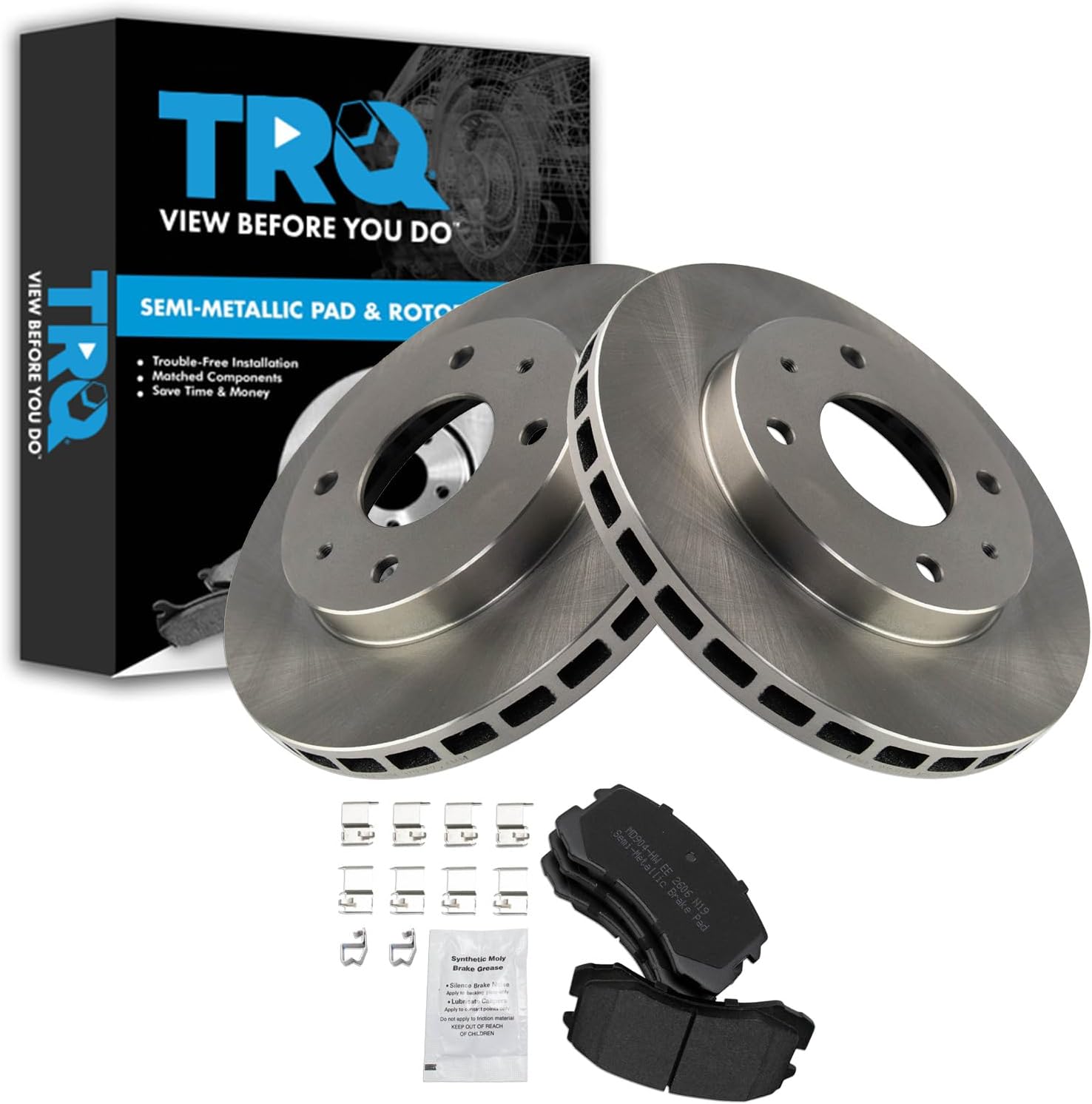 TRQ Lancer Semi-Metallic Kit |
Budget | Direct-fit OE replacement kit | Drivers wanting reliable wet-weather stopping | Check Price | ||
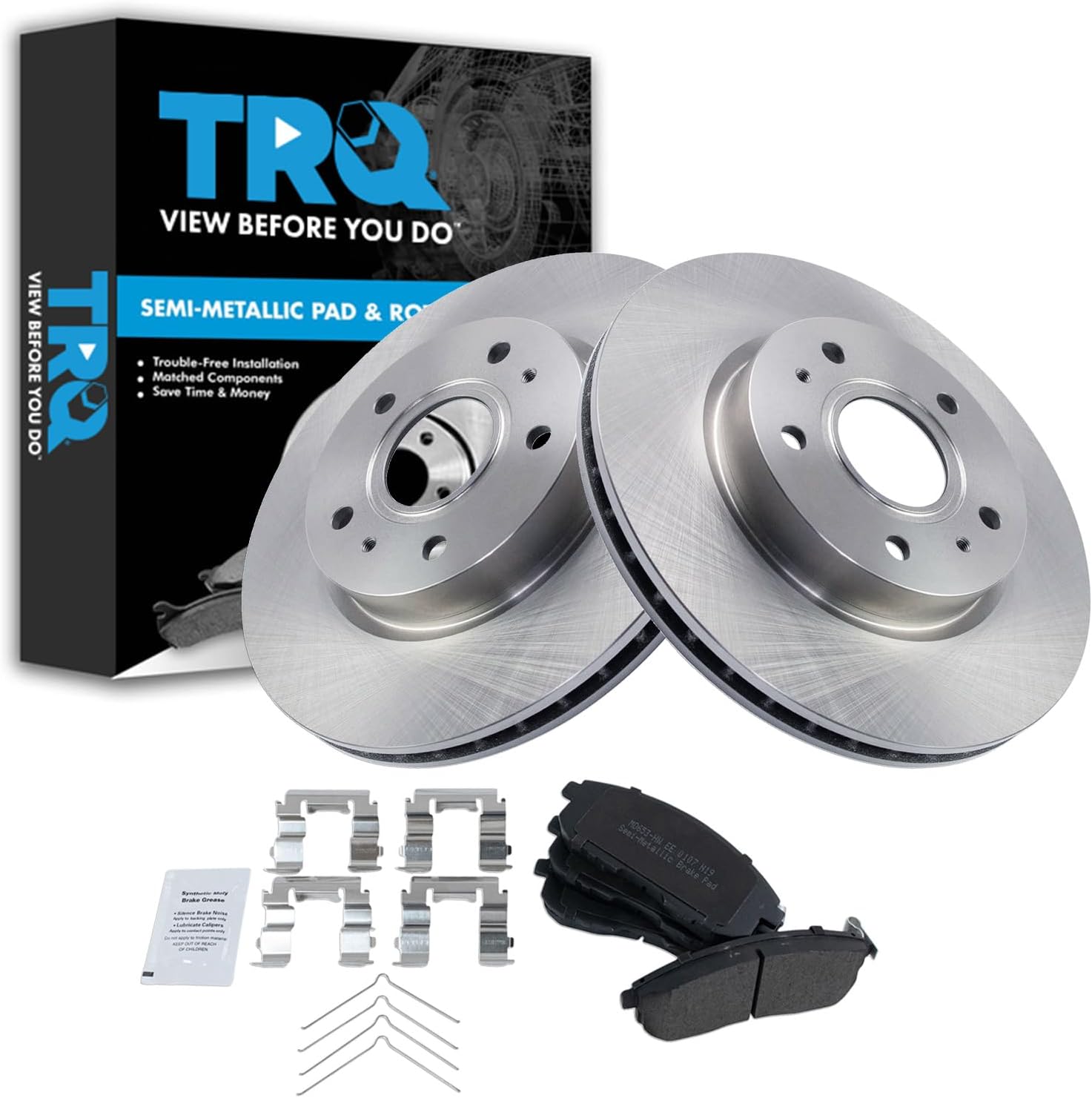 TRQ SX4 Semi-Metallic Kit |
Mid-Range | Positive-molded pads, larger rotor diameter | Value-conscious drivers who want extra rotor stopping area | Check Price | ||
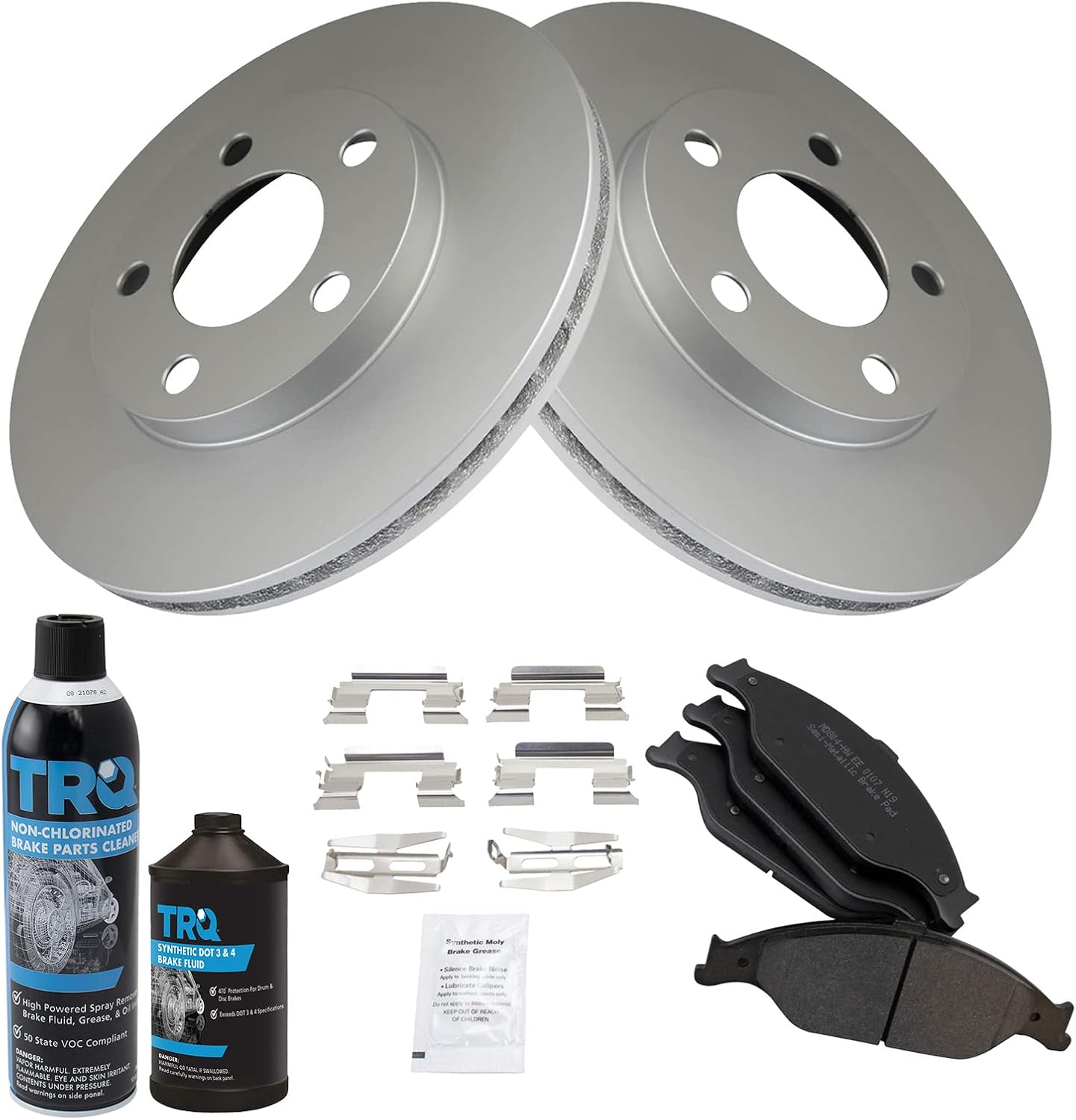 TRQ Mustang Premium Kit |
Premium | G-coated rotors + chemical kit | Drivers wanting better rust resistance and premium finish | Check Price |
1. TRQ Front Brake Pad & Rotor Kit Brake Pads Brake Rotor Semi-Metallic Compatible with 2002-2007 Mitsubishi Lancer
This TRQ semi-metallic kit delivers solid initial bite and consistent stopping for fall conditions. Customers praise fit and quiet operation; the kit includes pads, rotors, hardware and is designed for reduced break-in and vibration.
Key Specs
- Brake pad material: Semi-Metallic
- Front rotor diameter: 10.04 in (255 mm)
- Brake rotor venting: Vented
- Includes contact point grease & hardware
Pros
- Better initial bite in cool, wet conditions than many organic pads
- Direct-fit OE-style kit praised for accuracy of fit
- Quieter operation and less dust than cheaper semi-metal options
Cons
- Durability reported mixed — some users note shorter lifespan than expected
- Less rust protection on rotors compared with TRQ's G-coated premium option
Best For: Drivers wanting reliable wet-weather stopping
Check Latest Price on Amazon2. TRQ Front Brake Pad & Rotor Kit Brake Pads Brake Rotor Semi-Metallic Compatible with 2007-2008 Suzuki SX4
A mid-range TRQ kit with a slightly larger rotor diameter and positive-molded semi-metallic pads that reduce dust and vibration. Reviewers highlight fit, ease of installation and braking quality — with some variability in pad longevity.
Key Specs
- Brake pad material: Semi-Metallic
- Front rotor diameter: 11.02 in (280 mm)
- Brake rotor venting: Vented
- Positive molded pads with multi-layer shim
Pros
- Larger rotor diameter helps dissipate heat better during repeated stopping
- Positive-molded pads reduce dust and improve pedal feel vs some budget options
- Good balance of value and performance compared with aftermarket alternatives
Cons
- Durability can be inconsistent — some buyers reported premature pad wear
- Not G-coated; rotor corrosion resistance is average
Best For: Value-conscious drivers who want extra rotor stopping area
Check Latest Price on Amazon3. TRQ Front Brake Pad & Rotor Kit Brake Chemical Kit Brake Pads Brake Rotor Semi-Metallic Premium G-Coated Compatible with 1999-2004 Ford Mustang
This premium TRQ kit pairs semi-metallic pads with electrostatically G-coated rotors and includes a brake cleaner & fluid kit. The coating improves rust resistance — helpful for leaf-matted, wet fall roads — while the semi-metallic compound retains strong bite in cooler conditions.
Key Specs
- Brake pad material: Semi-Metallic
- Rotor coating: Premium G-Coated for rust prevention
- Includes brake cleaner & fluid kit
- 2-year / 24,000-mile limited product warranty (parts only)
Pros
- Better long-term rust resistance than the other TRQ kits thanks to G-coating
- Includes chemical kit for a cleaner installation and better break-in
- Semi-metallic formulation optimized for heat transfer and wet-condition bite
Cons
- Higher price tier than the other kits
- Some buyers still report mixed pad lifespan despite premium features
Best For: Drivers wanting better rust resistance and premium finish
Check Latest Price on AmazonWhich One Should You Choose?
If you want the best overall balance for fall driving — strong cold bite, good fit and quiet operation — choose the TRQ Front Brake Pad & Rotor Kit for 2002-2007 Mitsubishi Lancer (ASIN B0B9YRSW3V). It combines direct-fit convenience with semi-metallic bite that handles wet leaves and cooler temps well. If budget is tight but you still need good stopping power and a slightly larger rotor for heat dispersion, the TRQ kit for 2007-2008 Suzuki SX4 (ASIN B0B9YPVQDG) is a value-oriented pick. If corrosion resistance and a cleaner install matter most — for long, damp falls — pick the premium TRQ Mustang kit with G-coated rotors and chemical kit (ASIN B0BQPBXRNN).
Best for Specific Scenarios
- Daily commuter in leafy neighborhoods: TRQ Lancer Kit (B0B9YRSW3V) because semi-metallic pads maintain strong initial bite on cool, leaf-littered streets.
- Driver who wants the best value for performance: TRQ SX4 Kit (B0B9YPVQDG) because the positive-molded pads and larger rotor offer heat management and reduced dust for a mid-range price.
- Owner near the coast or in very damp climates: TRQ Mustang Premium Kit (B0BQPBXRNN) because the G-coated rotors resist rust and the included chemical kit helps a proper break-in.
Frequently Asked Questions
Are semi-metallic pads noisy on cold mornings?
Semi-metallic pads can be slightly louder than ceramics, especially right after a cold start. However, modern positive-molded pads with shims and chamfers (like the TRQ kits) are engineered to reduce vibration and noise while preserving cold-weather bite.
Do G-coated rotors matter for fall driving?
Yes — G-coated rotors provide electrostatic corrosion resistance on exposed rotor faces and hats. In wet, leaf-filled falls where moisture lingers, that coating helps keep rotors cleaner and reduces surface rust between drives.
Will ceramic pads perform poorly in cool, wet conditions?
Ceramic pads offer low dust and quiet operation, but some ceramic compounds develop less aggressive initial bite when cold or wet. For slippery leaf-covered roads, semi-metallic pads generally give a more reassuring initial response.
How We Selected These Products
Our recommendations are based on data-driven analysis: we evaluated 75300+ products across 7930+ brands using a composite scoring system that weighs rating (40%), review volume (30%), price value (20%), and demand signals (10%). Every product is ranked by data, not opinions.
Last updated: October 18, 2026
As an Amazon Associate we earn from qualifying purchases at no extra cost to you. Full disclosure.
GarageGist Score is our editorial ranking based on a composite analysis of product quality, value, and verified customer sentiment. Click through to Amazon for current pricing, availability, and live customer reviews.