As an Amazon Associate we earn from qualifying purchases. Learn more.
Ceramic vs Semi-Metallic vs Organic for Commuters (2026 Comparison)
If you drive to work every day, low noise, minimal brake dust and predictable longevity matter more than track-focused stopping power. This guide compares pad materials with a practical focus on commuters and then evaluates three Bendix ceramic options that match those priorities. You'll learn which material is best for stop-and-go traffic, what trade-offs to expect for dust and wear, and which Bendix model is the smarter buy for value, quiet operation, and reliable OE fit. Products were selected for commuter suitability (noise, dust, longevity), fit quality and real-world customer feedback.
Quick Answer
For most daily commuters a ceramic pad is the best compromise: Bendix Priority1 CFC1260C (ceramic) delivers the quietest operation and solid longevity for city driving, with low dust and OE fit that makes it our top pick.
Our Top Picks
Quick Comparison
Select 2-3 products to compare side-by-side
| Compare | Product | GarageGist Score | Price Tier | Key Feature | Best For | Action |
|---|---|---|---|---|---|---|
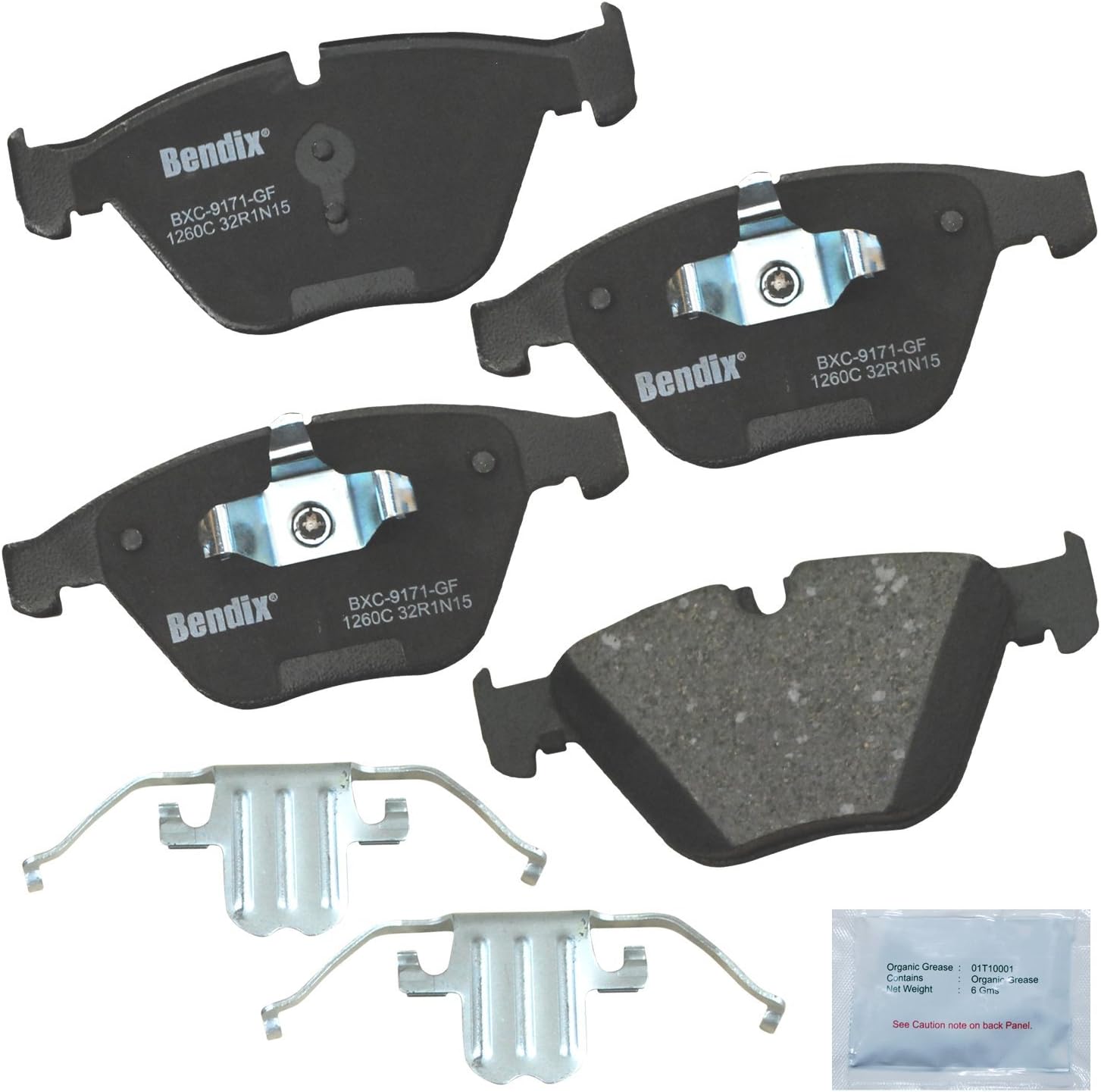 Bendix CFC1260C
|
Mid-Range | OE-fit ceramic for ultra-quiet braking | Commuters wanting minimal noise | Check Price | ||
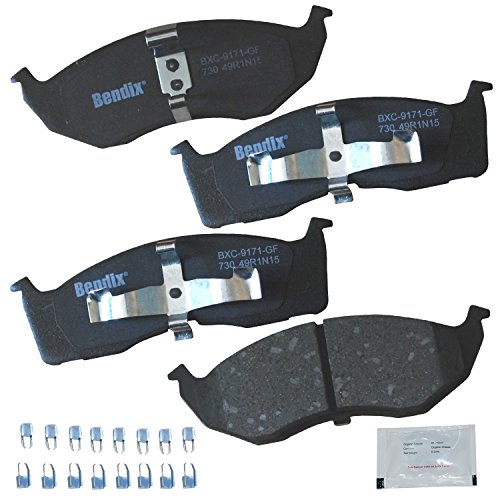 Bendix CFC730
|
Mid-Range | Balanced ceramic blend with hardware | Budget-conscious daily drivers | Check Price | ||
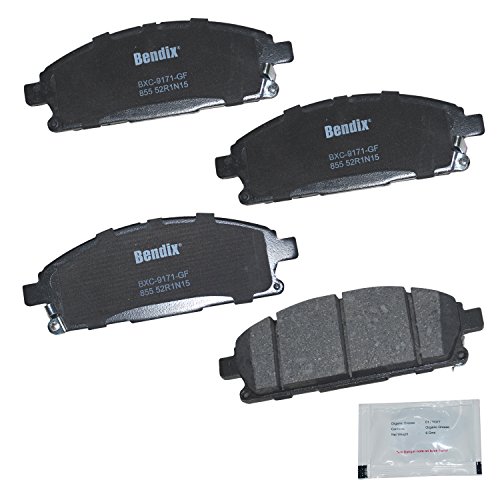 Bendix CFC855
|
Mid-Range | Ceramic blend tuned for larger vehicles | Drivers of SUVs and heavier daily drivers | Check Price |
1. Bendix Priority1 CFC1260C Ceramic Front Brake Pads for BMW 323i 2009-2008, 328i 2011-2007, 328i 2013, 328i xDrive 2011-2010, 328xi 2008, X1 2015-2012
A ceramic OE-replacement pad engineered for quiet operation and consistent stopping in everyday driving. Customers praise fit and ease of installation; the material minimizes noise and tends to produce less visible dust than many semi-metallic pads.
Key Specs
- OE replacement design for correct fit and function
- Advanced friction ceramic materials for consistent brake feel
- Engineered to reduce brake fade under typical driving
- Vehicle application: BMW 323i/328i/X1 series (listed years)
Pros
- Quieter than many semi-metallic options for stop-and-go commuting
- Cleaner rims: lower visible brake dust than typical semi-metallic pads
- OE-style fit and shims make installation straightforward compared with generic pads
Cons
- Ceramic compound can be less aggressive than semi-metallic in very cold stops
- Slightly higher cost than some basic aftermarket budget pads
Best For: Commuters wanting minimal noise
Check Latest Price on Amazon2. Bendix Priority1 CFC730 Disc Brake Pad Set Ceramic for Select Models Chrysler 300M,Concorde,Intrepid,LHS,Prowler
A value-oriented ceramic replacement that prioritizes quiet operation and OE fit. Reported by customers to offer good braking power and easy installation; some owners note minimal to moderate dust depending on driving style.
Key Specs
- OE replacement engineered for fit, form and function
- Advanced friction materials for stable stopping performance
- Includes specific shims, slots and chamfers for quieter braking
- Vehicle application: Chrysler and Dodge models (listed years)
Pros
- Better value than many premium ceramic lines for daily commuting
- Quieter braking and better NVH control compared with some budget semi-metallic pads
- Ease of installation: fits OEM calipers precisely more often than generic pads
Cons
- Some drivers report slightly more brake dust than the quietest ceramic option (CFC1260C)
- Durability can vary by vehicle and driving style—may wear faster under heavy loads
Best For: Budget-conscious daily drivers
Check Latest Price on Amazon3. Bendix Priority1 CFC855 Ceramic Front Brake Pads for Acura MDX 2006-2003, INFINITI Q45 2001-1997, QX4 2003-1997, Nissan Pathfinder 2004-1996, Quest 2009-2004, X-Trail 2008-2002
Ceramic pads formulated to handle heavier commuter vehicles like older SUVs and minivans. Customers highlight solid stopping power and good fit, though dust and longevity can depend on load and driving habits.
Key Specs
- OE-spec replacement pads for correct fit and braking behavior
- Advanced friction mix for consistent performance under load
- Designed to reduce brake fade and maintain pedal feel
- Vehicle application: Acura, Infiniti, Nissan, and similar models (listed years)
Pros
- Stronger stopping power under heavier loads than many commuter-focused ceramics
- Good fit for the listed SUV/minivan applications compared with universal aftermarket options
- Consistent braking feel that reduces fade in daily use
Cons
- Tends to produce more visible dust than the quietest ceramic pads on light cars
- Some owners debate long-term durability under heavy, frequent towing or very aggressive driving
Best For: Drivers of SUVs and heavier daily drivers
Check Latest Price on AmazonWhich One Should You Choose?
If you want the quietest, cleanest daily-driver pad → choose Bendix Priority1 CFC1260C (B01LGSVPF8). It offers the best mix of low noise, OE fit, and lower visible dust for commuter duties. If budget and value are most important → choose Bendix Priority1 CFC730 (B01LGSROL2); it delivers many ceramic benefits at a slightly better value and is easier to install than generic alternatives. If you drive a heavier SUV or older minivan and need stronger bite under load → choose Bendix Priority1 CFC855 (B01KHLGNY8). All three are mid-range ceramic OE-style replacements; pick based on your vehicle type and whether noise or load capacity is the priority.
Best for Specific Scenarios
- Quiet city commuting: Bendix CFC1260C because its ceramic compound and shims minimize squeal and dust.
- Best value daily replacement: Bendix CFC730 because it balances cost with OE-style fit and easy installation.
- Heavier vehicles or light towing: Bendix CFC855 because it maintains stronger stopping power under heavier loads.
Frequently Asked Questions
Are ceramic pads quieter than semi-metallic for daily driving?
Yes — ceramic pads are generally quieter and produce finer, lighter dust that’s less noticeable on wheels, making them a good choice for stop-and-go commuting.
Will ceramic pads wear my rotors faster?
Properly designed ceramic OE-replacement pads (like the Bendix Priority1 line) are formulated to be rotor-friendly. Excessive rotor wear is more often caused by contaminated pads, driving style, or mismatched pad/rotor materials.
How often should I replace brake pads on a commuter car?
Typical replacement intervals vary with driving habits, but many commuters replace pads every 30,000–50,000 miles. Watch for reduced thickness, unusual noise, or decreased stopping performance; those signs mean it’s time to inspect and likely replace pads.
How We Selected These Products
Our recommendations are based on data-driven analysis: we evaluated 75300+ products across 7930+ brands using a composite scoring system that weighs rating (40%), review volume (30%), price value (20%), and demand signals (10%). Every product is ranked by data, not opinions.
Last updated: August 09, 2026
As an Amazon Associate we earn from qualifying purchases at no extra cost to you. Full disclosure.
GarageGist Score is our editorial ranking based on a composite analysis of product quality, value, and verified customer sentiment. Click through to Amazon for current pricing, availability, and live customer reviews.