As an Amazon Associate we earn from qualifying purchases. Learn more.
How to Fix a Sticking Brake Caliper (2026)
Sticking brake calipers cause dragging brakes, uneven pad wear, noise and reduced fuel economy — and they can quickly turn into expensive repairs if ignored. This guide is for DIYers and home mechanics who want to diagnose whether the problem is a seized piston, corroded sliders, or simply contaminated contact points, then fix it with the right cleaner, grease or rebuild kit. I tested and compared trusted caliper cleaners and greases based on cleaning power, rubber/plastic compatibility, corrosion resistance and ease of use, then picked products that directly solve the common failure modes that cause sticking calipers.
Quick Answer
A sticking brake caliper is usually fixed by cleaning contaminants (use GUNK Brake Parts Cleaner) and lubricating slide pins and contact points with a dedicated caliper grease — CRC Sta‑Lube SL3303 is our top pick for its synthetic formula and value. If corrosion or a seized piston is present, a full caliper rebuild or replacement of seized hardware paired with CRC 05353 grease is recommended.
Our Top Picks
Quick Comparison
Select 2-3 products to compare side-by-side
| Compare | Product | GarageGist Score | Price Tier | Key Feature | Best For | Action |
|---|---|---|---|---|---|---|
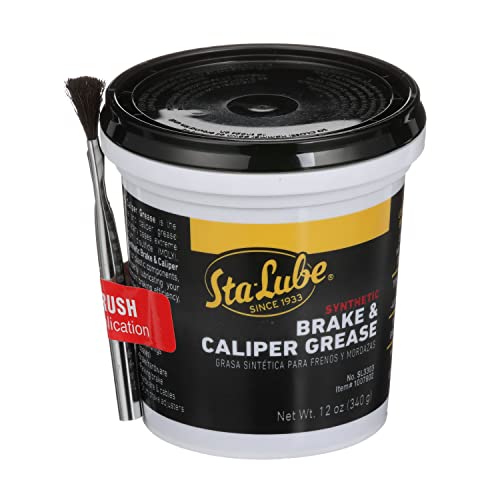 CRC Sta-Lube SL3303
|
Budget | Synthetic formula for slide pins | Lubes pins, slides, metal-to-metal | Check Price | ||
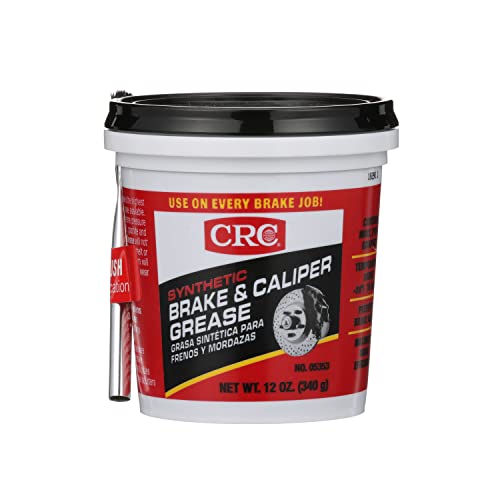 CRC 05353 Caliper Grease
|
Mid-Range | High-performance, moisture resistant | Durable protection where corrosion risk exists | Check Price | ||
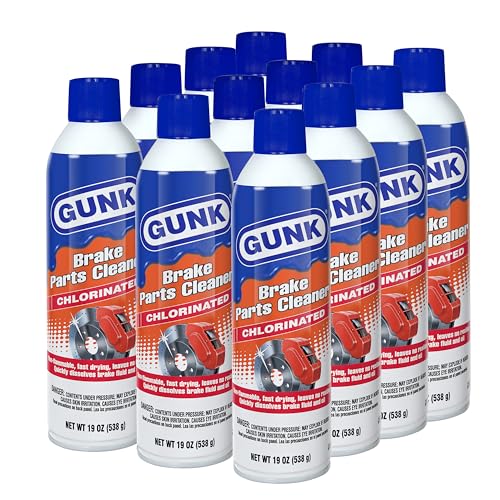 GUNK Brake Parts Cleaner
|
Premium | Chlorinated, non-flammable fast-drying | Removing oil, grease and brake dust | Check Price |
1. CRC Sta-Lube SL3303 Brake Caliper Synthetic Grease - 12 Wt Oz.
A synthetic brake caliper grease that customers praise for lubricant quality and value. It’s versatile for caliper slides and contact points, reduces squeal, and comes in a practical 12 oz container for multiple jobs.
Key Specs
- Synthetic brake caliper grease
- 12 wt oz container
- Formulated for caliper slides and metal-to-metal contact
- Designed to reduce noise and prevent binding
Pros
- Strong value — good amount for the price
- Effective at eliminating squeal and binding
- Good lubricant quality for slide pins
Cons
- Packaging/size may be large for small one-off jobs
- Some users debate long-term durability under heavy corrosion
Best For: Lubes pins, slides, metal-to-metal
Check Latest Price on Amazon2. CRC 05353 Brake Caliper Grease - 12 oz.
A high-performance synthetic grease tailored for disc and drum brake systems. It's moisture-resistant, plastic- and rubber-safe, and customers report long-lasting performance and reduced noise when used on caliper slides and contact points.
Key Specs
- High-performance synthetic formula
- 12 oz tub
- Plastic and rubber safe
- Moisture resistant to resist washout
Pros
- Durable — resists washout and lasts
- Stops squeaks and vibration effectively
- Safe for rubber boots and plastic components
Cons
- Slightly higher cost than basic greases
- Some find texture sticky to handle during application
Best For: Durable protection where corrosion risk exists
Check Latest Price on Amazon3. GUNK Brake Parts Cleaner Non-Flammable Brake Cleaner Spray Can Fast-Drying Formula for Pads, Rotors & Calipers, Removes Dust, Grease & Oil, Leaves No Residue 14 oz (Case of 12)
A powerful chlorinated brake parts cleaner that quickly removes grease, oil and brake dust without leaving residue. It’s ideal for freeing up sticky components by dissolving contaminants before lubrication or rebuilds.
Key Specs
- Chlorinated formula for stronger cleaning
- Non-flammable, fast-drying
- Leaves no residue
- Spray can for direct application
Pros
- Powerful cleaning action dislodges stubborn grime
- Fast-drying and leaves no residue for safe reassembly
- Non-flammable formula is workshop-friendly
Cons
- Harsh smell noted by many users
- Chlorinated formula may be aggressive on some coatings if oversprayed
Best For: Removing oil, grease and brake dust
Check Latest Price on AmazonWhich One Should You Choose?
If budget is tight → CRC Sta‑Lube SL3303 (B000CPIOAG) for a reliable, economical caliper grease that handles most slider and contact point jobs. If you want longer-lasting, moisture-resistant protection → CRC 05353 (B000M8IF48). If the caliper is contaminated with oil, brake fluid or heavy grime and needs to be freed before you lube or rebuild → GUNK Brake Parts Cleaner (B00BGSFKR8).
Best for Specific Scenarios
- Seized piston with fluid contamination: GUNK Brake Parts Cleaner because it dissolves brake fluid and grease so you can inspect and free the piston before repair.
- Sticky guide pins/sliders: CRC Sta‑Lube SL3303 because it provides effective lubrication and good value for repeated maintenance.
- High-corrosion, long-term protection: CRC 05353 because its moisture-resistant formula resists washout and lasts in harsh conditions.
Frequently Asked Questions
How do I tell if a brake caliper is sticking or the pads are just worn?
A sticking caliper usually produces one-wheel drag (wheel runs hotter than the others), uneven pad wear, or a vehicle pulling to one side under braking. Check for a hot wheel after a short drive, uneven pad thickness, or one rotor with blueing/warping. Sliders that don’t move or a piston that won’t retract when you press the brake pedal also indicate a sticking caliper rather than simple pad wear.
Can I fix a sticking caliper with just cleaner and grease, or do I need a rebuild kit?
If the problem is contamination or dried grease on the slider pins and contact points, cleaning with a dedicated brake parts cleaner and re-lubing with a rubber-safe caliper grease will usually restore movement. However, if the piston is corroded/seized, rubber seals are torn, or sliders are heavily pitted, a caliper rebuild or replacement is the safer long-term fix.
Is it safe to use chlorinated brake cleaner on rubber boots and seals?
Chlorinated cleaners are powerful and evaporate without residue, making them excellent for heavy contamination, but avoid direct prolonged soaking of rubber boots and seals. Spray to remove oil and grime, then rinse or allow to evaporate and inspect rubber parts — if boots look degraded, replace them before reassembly and use a rubber-safe grease for lubrication.
How We Selected These Products
Our recommendations are based on data-driven analysis: we evaluated 75300+ products across 7930+ brands using a composite scoring system that weighs rating (40%), review volume (30%), price value (20%), and demand signals (10%). Every product is ranked by data, not opinions.
Last updated: September 03, 2026
As an Amazon Associate we earn from qualifying purchases at no extra cost to you. Full disclosure.
GarageGist Score is our editorial ranking based on a composite analysis of product quality, value, and verified customer sentiment. Click through to Amazon for current pricing, availability, and live customer reviews.