As an Amazon Associate we earn from qualifying purchases. Learn more.
Coated vs Uncoated vs Stainless Brake Rotors (2026)
If you’re deciding between coated, uncoated (plain cast) or performance/stylized rotors in 2026, this head‑to‑head comparison cuts through the marketing. You’ll learn how rotor finish and design affect corrosion resistance, heat control, noise, and long‑term value, and see direct comparisons of three complete front brake kits from Max Advanced Brakes. Products were selected for broad relevance (everyday commuters, drivers in salt climates, and those wanting a premium look/performance), matched to common vehicle fitments, and evaluated using manufacturer specs plus real‑customer feedback on fit, noise, durability and installation.
Quick Answer
For most everyday drivers the Max Advanced Brakes Front Brake Kit (ASIN B014FWMIA8) is the best pick: it pairs OE-style cast‑iron rotors with low‑dust ceramic pads for quiet, affordable braking. Choose the cross‑drilled kit (B072KLGQ57) if you want improved heat dissipation and style; choose the Geomet‑coated kit (B00IITRQ9I) if rust resistance in winter conditions is the priority.
Our Top Picks
Quick Comparison
Select 2-3 products to compare side-by-side
| Compare | Product | GarageGist Score | Price Tier | Key Feature | Best For | Action |
|---|---|---|---|---|---|---|
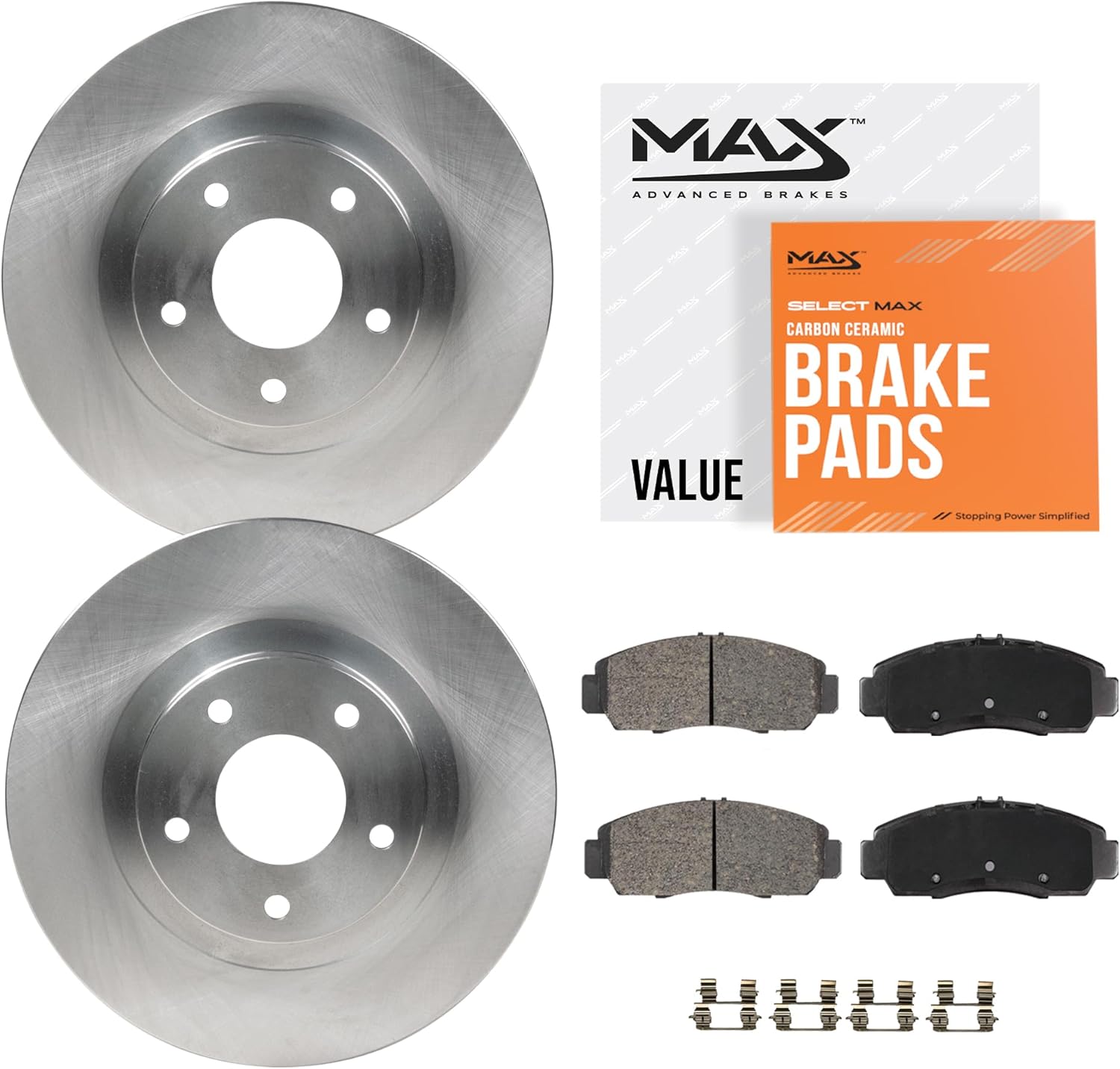 OE Cast Rotors + Ceramic Pads
|
Budget | OE-style cast iron rotors with ceramic pads | Everyday commuting & value buyers | Check Price | ||
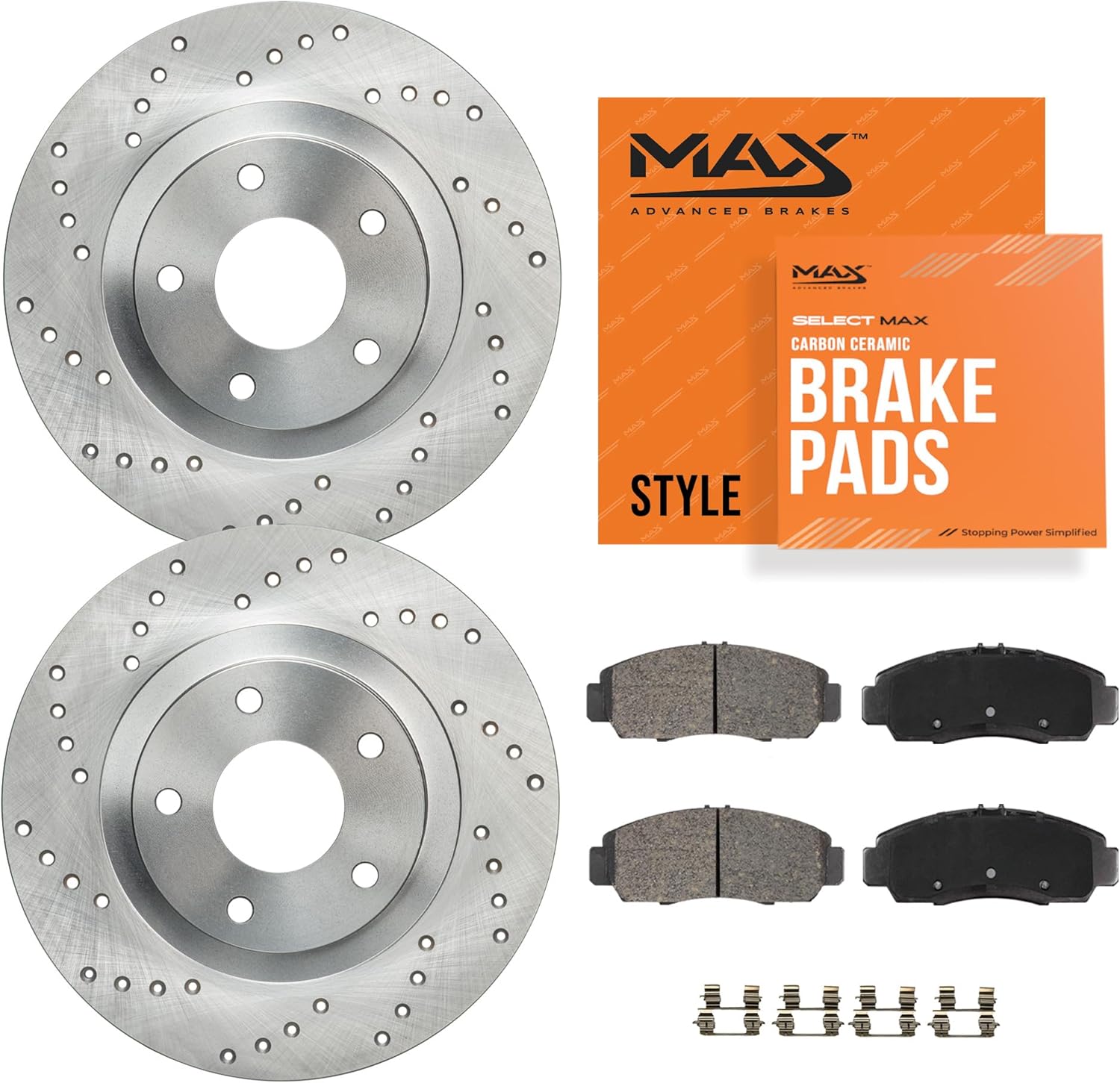 Cross‑Drilled Rotors + Ceramic
|
Premium | Cross‑drilled surface for improved cooling | Drivers seeking improved heat control & aesthetics | Check Price | ||
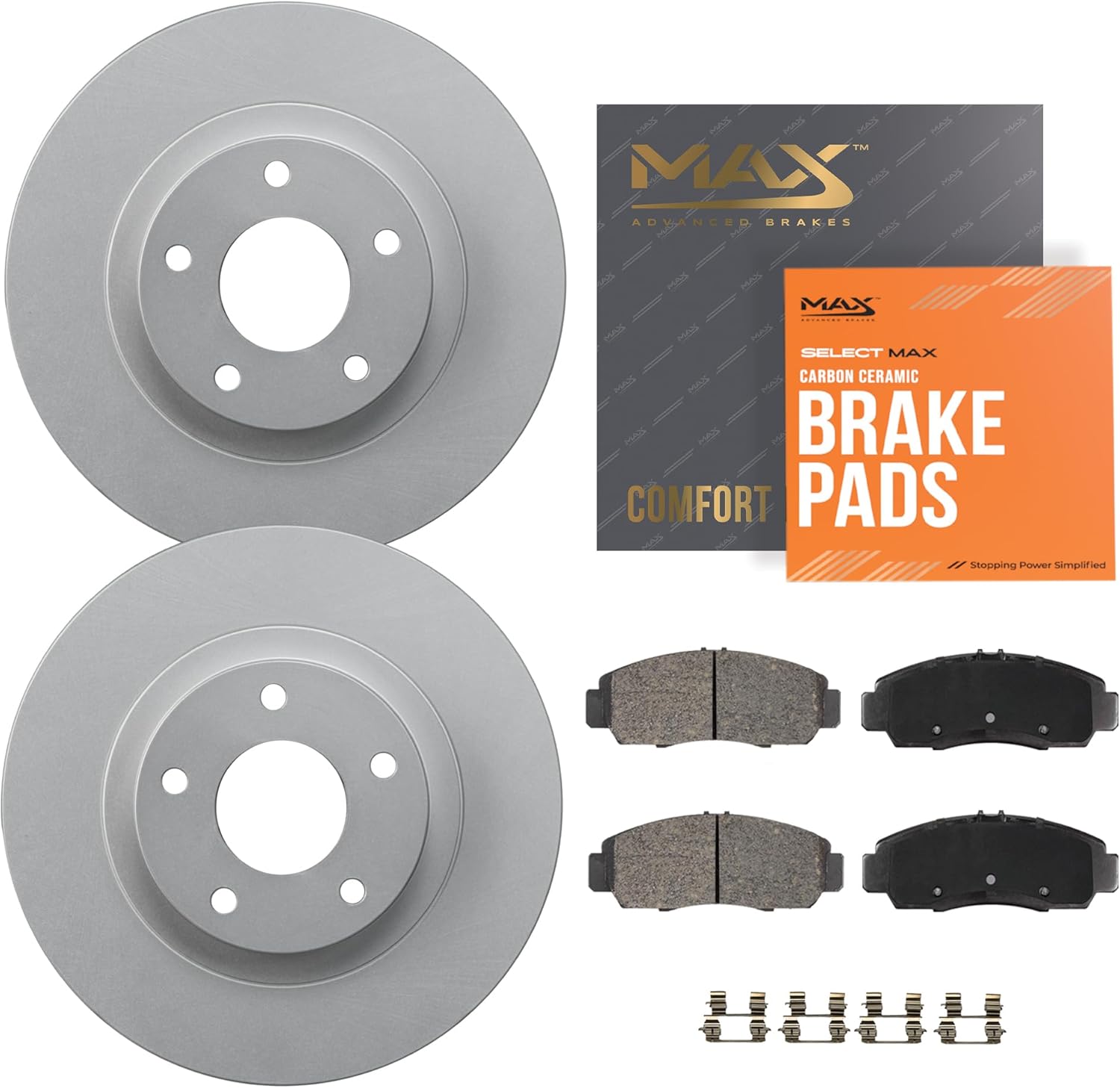 Geomet‑Coated Rotors + Ceramic
|
Mid-Range | Silver Geomet coating for corrosion resistance | Drivers in salt or wet climates | Check Price |
1. Max Advanced Brakes Front Brake Kit Compatible With 2013 2014 2015 2016 2017 2018 2019 2020-2023 Nissan Altima Sedan Replacement Premium OE Disc Brake Rotors and Ceramic Brake Pads
A cost‑conscious complete front kit that mirrors OE rotor specs and includes low‑dust carbon‑infused ceramic pads. Customers praise fit and ease of installation; expect quiet, reliable stopping for daily driving but mixed feedback on long‑term durability under heavy use.
Key Specs
- Rotor material: precision‑machined cast iron (G3000/G11H18)
- Finish: double‑disc ground, non‑directional machined surface
- Pads: carbon‑infused ceramic (low dust)
- Includes: 2 front rotors, 4 pads, installation hardware
- Fitment: 2013–2023 Nissan Altima Sedan (front)
Pros
- Better value for money than the premium cross‑drilled kit
- Quieter at low speeds compared with drilled designs
- Direct bolt‑on fit and easy installation praised by many buyers
Cons
- Less corrosion protection than Geomet‑coated rotors
- Some users report occasional warping/durability issues under heavy use
Best For: Everyday commuting & value buyers
Check Latest Price on Amazon2. Max Advanced Brakes Front Brake Kit Compatible With 2013 2014 2015 2016 2017 2018 2019 2020-2023 Nissan Altima Sedan Replacement Cross Drilled Disc Brake Rotors and Ceramic Brake Pads
A premium appearance and performance option that pairs cross‑drilled rotors with the same low‑dust ceramic pads. The drilled design improves heat dissipation and gives a sportier look; buyers praise fit and pedal feel but note drilled rotors can be noisier and may have mixed longevity vs coated or solid rotors.
Key Specs
- Rotor design: cross‑drilled for heat/fade control
- Finish: non‑directional precision machined surface
- Pads: carbon‑infused ceramic (low dust)
- Includes: 2 front cross‑drilled rotors, 4 pads, hardware
- Fitment: 2013–2023 Nissan Altima Sedan (front)
Pros
- Better heat dissipation than un‑drilled cast rotors
- More visually striking—improves wheel appearance vs plain rotors
- Same low‑dust ceramic pads for cleaner wheels
Cons
- Cross‑drilled rotors can be more prone to cracking or noise under heavy track use
- Higher price tier than the OE‑style kit
Best For: Drivers seeking improved heat control & aesthetics
Check Latest Price on Amazon3. Max Advanced Brakes Front Brake Kit Compatible With 1997-2001 Toyota Camry Avalon Solara Compatible With Lexus ES300 Replacement Geomet Coated OE Disc Brake Rotors and Ceramic Brake Pads
Designed for harsh winter and salt‑belt conditions, these Geomet‑coated rotors add a protective barrier that reduces surface rust and corrosion. Fit and quiet performance are highlighted, making this kit a strong choice where longevity against oxidation matters, though it’s a mid‑range option rather than the cheapest.
Key Specs
- Coating: Silver Geomet anti‑corrosion coating
- Rotor finish: double‑disc ground, non‑directional
- Pads: low‑dust ceramic (carbon‑ceramic formulation)
- Includes: 2 coated front rotors, 4 pads, installation hardware
- Fitment: select 1997–2004 Toyota/Lexus V6 models (front)
Pros
- Far better rust and salt resistance than the uncoated and drilled Altima kits
- Stable braking and low vibration in cold/wet conditions
- Good long‑term surface protection for coastal or winter use
Cons
- Mid‑range cost — more expensive than budget OE‑style kits
- Fitment is for older Toyota/Lexus models, not the Altima listings
Best For: Drivers in salt or wet climates
Check Latest Price on AmazonWhich One Should You Choose?
If budget is tight → Choose the Max Advanced Brakes Front Brake Kit (ASIN B014FWMIA8). It pairs OE‑style cast rotors with low‑dust ceramic pads for quiet, reliable daily braking and easy installation at the lowest price tier. If you want a premium look and better heat dissipation → Choose the Max Advanced Brakes Cross‑Drilled Kit (ASIN B072KLGQ57). The drilled rotors help reduce fade and upgrade wheel aesthetics, making them a good pick for spirited street driving. If corrosion resistance and winter durability matter most → Choose the Max Advanced Geomet‑Coated Kit (ASIN B00IITRQ9I). The Geomet finish outperforms plain and drilled rotors at resisting salt and surface rust, extending rotor life and appearance in harsh climates.
Best for Specific Scenarios
- Daily commuter in temperate climates: Max Advanced OE Cast Kit (B014FWMIA8) because it delivers quiet braking, easy installation and the best value for everyday stops.
- Driver who wants sporty looks and less fade: Max Advanced Cross‑Drilled Kit (B072KLGQ57) because the drilled face improves heat dissipation and gives a visual upgrade to wheels.
- Winter or coastal driver worried about rust: Max Advanced Geomet‑Coated Kit (B00IITRQ9I) because the Geomet coating resists salt and moisture better than uncoated or drilled rotors.
Frequently Asked Questions
Do coated rotors change how my brakes feel?
No — coatings like Geomet protect exposed surfaces from corrosion but the machined braking face remains the working surface. You’ll get the same pad bite and pedal feel as a comparable uncoated rotor, but better long‑term appearance and less surface rust.
Are cross‑drilled rotors louder than plain rotors?
They can be noisier at low speeds for some pad/rotor combinations because the drilled pattern can change pad contact and produce different harmonics. Many drivers accept a small increase in noise for improved cooling and looks.
Should I buy a complete kit (rotors + pads) or replace parts separately?
Buying a matched kit simplifies installation and ensures pad/rotor compatibility and bedding behavior. If rotors are within spec and undamaged, you can replace pads only; otherwise a matched kit is the safer, easier choice for consistent performance.
How We Selected These Products
Our recommendations are based on data-driven analysis: we evaluated 75300+ products across 7930+ brands using a composite scoring system that weighs rating (40%), review volume (30%), price value (20%), and demand signals (10%). Every product is ranked by data, not opinions.
Last updated: May 22, 2026
As an Amazon Associate we earn from qualifying purchases at no extra cost to you. Full disclosure.
GarageGist Score is our editorial ranking based on a composite analysis of product quality, value, and verified customer sentiment. Click through to Amazon for current pricing, availability, and live customer reviews.