As an Amazon Associate we earn from qualifying purchases. Learn more.
How to Replace a Worn Tie Rod End: Parts & Tools That Make It Easy (2026)
Loose steering, wandering on the highway, or uneven tire wear usually points to a bad tie rod end — a small part that controls a huge safety issue. This guide is for DIYers and home-garage mechanics who want a step-by-step fix for steering play plus the specific parts and affordable tools that make the job straightforward and durable. You’ll learn how to confirm worn tie rod ends, what replacement parts to choose for long life, and which puller/separator kits deliver the best fit and value. Products were chosen for fit, build quality, ease of installation, and real-world durability feedback.
Quick Answer
Replace worn tie rod ends to eliminate steering play and wander. For a reliable replacement part pick the MOOG ES3096L tie rod end for fit and durability; for the removal job the Orion Motor Tech OMT 5-in-1 (B01A0AWELW) tool kit is the most versatile option to separate stubborn tie rods quickly.
Our Top Picks
Quick Comparison
Select 2-3 products to compare side-by-side
| Compare | Product | GarageGist Score | Price Tier | Key Feature | Best For | Action |
|---|---|---|---|---|---|---|
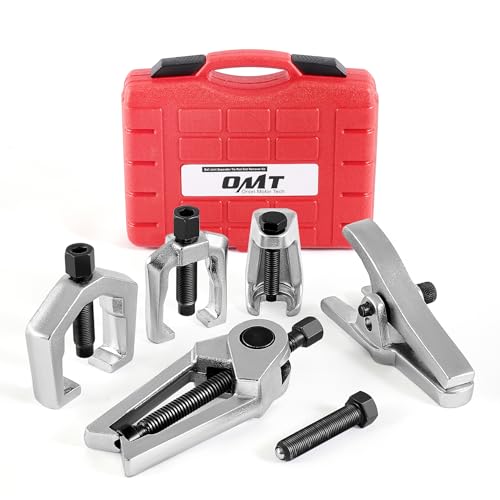 OMT 5-in-1 (RD06)
|
Mid-Range | Five-function front-end puller kit | DIYers who want one kit for many cars | Check Price | ||
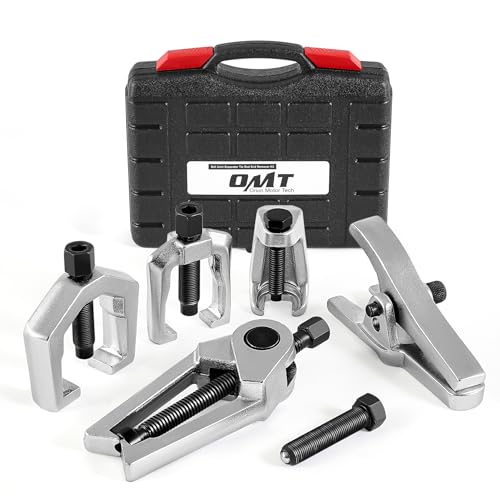 Orion 5-in-1 (BS06)
|
Mid-Range | Hardened alloy construction | Owners of multiple vehicle makes | Check Price | ||
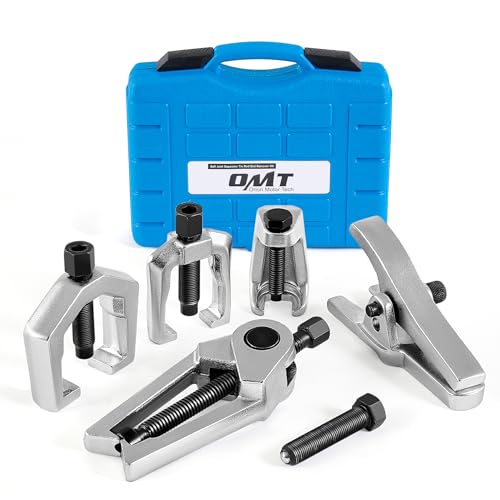 Orion 5pc (BL06)
|
Mid-Range | Splitter removal with organized case | Home mechanics needing a compact kit | Check Price | ||
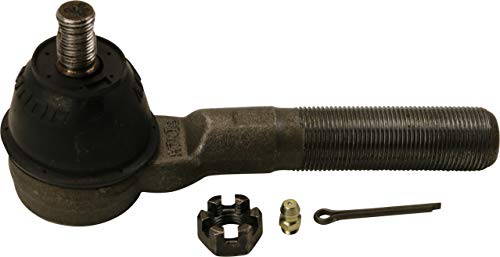 MOOG ES3096L
|
Mid-Range | Press-in cover plate & greasable socket | Jeep owners seeking OEM-fit durability | Check Price | ||
 Orion 5-in-1 (RB06)
|
Mid-Range | Multi-fit splitter tools | Budget-conscious DIY mechanics | Check Price |
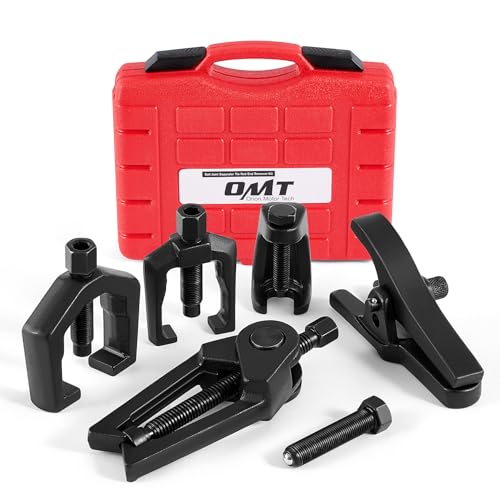
1. OMT 5-in-1 Ball Joint Separator, Pitman Arm Puller, Tie Rod End Tool Set for Front End Service, Splitter Removal Kit (RD06)
A versatile front-end service kit that solves the hardest part of tie rod replacement: getting the old end off. The hardened-alloy tools and molded ABS case make on‑car work easier; users report it separates tie rods reliably and is excellent value for a home mechanic.
Key Specs
- Includes 5 adjustable tools: ball joint separator, tie rod remover, pitman pullers
- Hardened alloy construction
- Professional molded ABS case
- Universal compatibility for many domestic and import vehicles
Pros
- All-in-one kit reduces need to buy separate pullers
- Works well for removing stuck tie rod ends
- Good value for home mechanics
Cons
- Some users report thread quality concerns on long jobs
- A few parts can be less robust under heavy professional use
Best For: DIYers who want one kit for many cars
Check Latest Price on Amazon2. Orion Motor Tech 5-in-1 Ball Joint Separator, Pitman Arm Puller, Tie Rod End Tool Set for Front End Service, Splitter Removal Kit (BS06)
Same core design as other Orion 5-in-1 kits with hardened alloy parts and a compact case. It solves the tie rod separation problem by providing the right-shaped tools to apply force without damaging boots or ball studs, making removal faster and safer.
Key Specs
- 5 adjustable front-end tools
- Hardened alloy for strength
- Custom-molded carry case
- Designed for domestic and import vehicles
Pros
- Versatile — handles several front-end tasks
- Durable alloy for routine DIY use
- Easy to store and transport
Cons
- Mixed feedback on thread durability with heavy use
- May not fit very large truck components
Best For: Owners of multiple vehicle makes
Check Latest Price on Amazon3. Orion Motor Tech 5pc Ball Joint Separator, Pitman Arm Puller, Tie Rod End Tool Set for Front End Service, Splitter Removal Kit (BL06)
A practical 5-piece separator and puller kit that helps remove stubborn tie rod ends without hammering on suspension parts. Customers praise its ease of use and value; occasional build-quality reports suggest using penetrating oil and care on older, rusted studs.
Key Specs
- Ball joint separator and tie rod end remover included
- Conical pitman arm puller
- ABS storage case
- Hardened alloy pieces
Pros
- Good functionality for typical DIY jobs
- Compact case keeps pieces organized
- Value-focused choice
Cons
- Some users see early wear on threads if over-torqued
- Size can be small for heavy trucks
Best For: Home mechanics needing a compact kit
Check Latest Price on Amazon4. MOOG ES3096L Steering Tie Rod End for Jeep Wrangler
A replacement tie rod end engineered for a near‑OE fit; the pressed-in cover plate and greasable socket help keep contaminants out and extend life. This part tightens steering feel and restores alignment geometry when installed correctly.
Key Specs
- Vehicle-specific fit (check Confirmed Fit tool before buying)
- Patented pressed-in cover plate to seal out debris
- Greaseable socket and Belleville preload washer
- Heat-treated ball studs and gusher bearing design
Pros
- Designed to restore like-new steering feel
- Greaseable for extended service life
- Strong fit-and-forget build quality
Cons
- Some users note potential rust on long-term exposure
- Vehicle-specific — confirm exact fit before purchase
Best For: Jeep owners seeking OEM-fit durability
Check Latest Price on Amazon5. Orion Motor Tech 5-in-1 Ball Joint Separator, Pitman Arm Puller, Tie Rod End Tool Set for Front End Service, Splitter Removal Kit (RB06)
A lower-cost variant of Orion's 5-in-1 kits that still provides the key tools for separating tie rods and ball joints. It solves the removal puzzle for most cars but may show durability limits under heavy or repeated professional use.
Key Specs
- Five adjustable tools for front-end service
- Hardened alloy construction
- Portable ABS case
- Designed for a variety of vehicles
Pros
- Affordable way to get core puller functionality
- Useful versatility for occasional projects
- Compact storage case
Cons
- Reports of cracked guide cups or stripped threads under heavy load
- May be too small for some larger vehicles
Best For: Budget-conscious DIY mechanics
Check Latest Price on AmazonWhich One Should You Choose?
If you need a versatile removal kit that handles most tie rod jobs, choose the OMT 5-in-1 (B01A0AWELW). If budget is tight and you need a basic kit for occasional DIY work, the Orion RB06 (B08J6JTVGM) is a practical pick. If you want the replacement part that best restores steering feel and allows greasing, pick the MOOG ES3096L (B000C59W7U) and pair it with one of the Orion puller kits to remove the old end safely.
Best for Specific Scenarios
- Routine Jeep steering rebuild: MOOG ES3096L because it's designed for Jeep fit, has a greaseable socket, and helps restore like-new steering precision.
- One-off DIY tie rod replacement: OMT 5-in-1 (B01A0AWELW) because its five tools handle stubborn studs and reduce the need for extra purchases.
- Occasional backyard mechanic: Orion RB06 (B08J6JTVGM) because it provides the essentials at a lower cost and is compact for storage.
Frequently Asked Questions
What are the clear signs a tie rod end is worn and causing steering play?
Signs include loose or vague steering, steering wheel wandering at highway speeds, uneven tire wear on the inside or outside edge, clunking noise when turning, and visible torn or leaking boots on the tie rod end. You can also jack one corner and wiggle the wheel — lateral movement at the tie rod where it meets the knuckle indicates worn joints.
Can I replace only the outer tie rod end and leave the inner one?
Yes — many vehicles have inner and outer tie rod ends that wear independently. Replacing the outer end often fixes play if the inner is still tight. However, inspect the inner end and steering rack for play; if the inner is worn, replace both or the whole assembly. After replacing any tie rod end you should get a wheel alignment.
Do I need a wheel alignment after replacing a tie rod end?
Yes. Tie rod replacement alters toe settings and can change tracking. A professional alignment is required to restore proper toe and prevent rapid, uneven tire wear. If you replace and adjust using the old position as a guide, still confirm with a shop alignment tool.
How do the puller kits here prevent damage during removal?
A proper separator/puller applies controlled force around the ball stud or pitman arm to separate tapered joints without hammering on the stud or tearing boots. Hardened alloy designs and correct conical cups avoid marring threads or pressing the boot into the joint. Use penetrating oil, and follow torque instructions to avoid stripping puller threads.
Which tie rod end type lasts longer: sealed or greasable?
Greaseable tie rod ends can last longer if you maintain them, because fresh grease flushes contaminants and prevents bearing wear. Sealed units are maintenance-free but depend entirely on boot integrity and corrosion resistance. For off-road or salted-road use, a greasable design usually offers better long-term service if you commit to periodic greasing.
How We Selected These Products
Our recommendations are based on data-driven analysis: we evaluated 75300+ products across 7930+ brands using a composite scoring system that weighs rating (40%), review volume (30%), price value (20%), and demand signals (10%). Every product is ranked by data, not opinions.
Last updated: June 25, 2026
As an Amazon Associate we earn from qualifying purchases at no extra cost to you. Full disclosure.
GarageGist Score is our editorial ranking based on a composite analysis of product quality, value, and verified customer sentiment. Click through to Amazon for current pricing, availability, and live customer reviews.