As an Amazon Associate we earn from qualifying purchases. Learn more.
How to Reduce Trailer Sway Without Replacing Your Hitch (2026)
Trailer sway — sudden lateral oscillation of your trailer — is one of the scariest problems tow-vehicle owners face. If you’re not ready to replace your hitch, there are practical add-on fixes that stop or reduce sway: friction-style anti-sway bars, integrated sway control in weight-distribution systems, better shanks, and smarter loading. This guide reviews three proven products and explains how each one reduces sway, what to look for when choosing a retrofit solution, and real-world installation and compatibility points. Products here were selected for sway performance, ease of installation, fit/compatibility, build quality, and value to owners who want to keep their existing hitch.
Quick Answer
Yes — you can significantly reduce trailer sway without swapping the hitch. The CURT 17200 Trailer Anti-Sway Bar Control Kit is our top pick because its brake-pad style friction control mounts to the frame and hitch ball to damp lateral motion quickly while remaining adjustable and easy to install.
Our Top Picks
Quick Comparison
Select 2-3 products to compare side-by-side
| Compare | Product | GarageGist Score | Price Tier | Key Feature | Best For | Action |
|---|---|---|---|---|---|---|
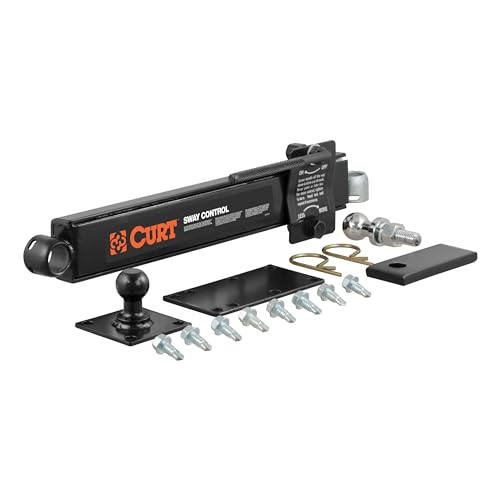 CURT 17200 Anti-Sway
|
Budget | Brake-pad style friction damping | Small-to-mid campers & A-frame trailers | Check Price | ||
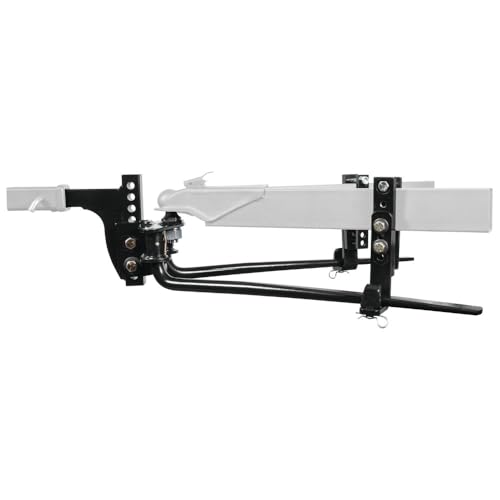 Reese 49913 Kit
|
Premium | Integrated sway control with weight distribution | Heavy trailers needing distribution & sway control | Check Price | ||
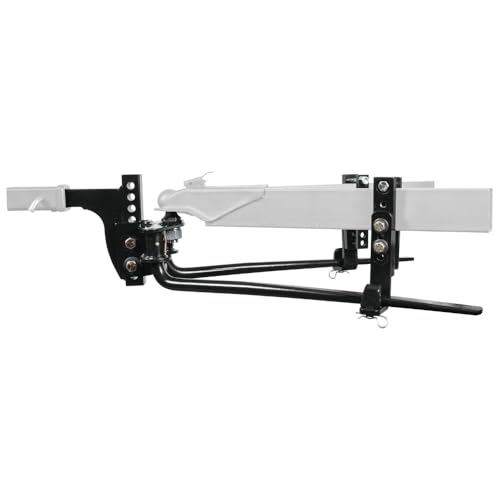 Reese 49912 Pro
|
Premium | Round bar spring weight distribution | Mid-weight trailers up to 8,000 lbs | Check Price |
1. CURT 17200 Trailer Anti-Sway Bar Control Kit
The CURT 17200 uses a brake-pad-style friction element to resist lateral motion at the coupler, reducing oscillation without changing your hitch. It mounts between the trailer frame and a separate sway-control ball on the ball mount, is highly adjustable, and includes a complete kit for quick installation.
Key Specs
- Friction material similar to brake pads for lateral resistance
- Compatible with most weight distribution hitches and A-frame trailers
- Adjustable via hex nut toggle for different loads
- Complete kit includes trailer- and hitch-mounted balls, mount plate and clips
Pros
- Effectively dampens lateral sway using friction material
- Good value and includes everything needed for installation
- Adjustable and easy to engage/disengage
Cons
- Some users report mixed assembly quality or missing parts on arrival
- Fit can vary slightly by trailer frame — may need minor tweaking
Best For: Small-to-mid campers & A-frame trailers
Check Latest Price on Amazon2. Reese 49913 Integrated Sway Control Weight Distribution Kit For Trailer , 11,500 lbs. Capacity, Shank Included.
The Reese 49913 combines weight-distribution spring bars with a preinstalled sway-control ball so the system both levels the tow vehicle and resists lateral movement. By transferring tongue load and using a built-in sway head, it reduces sway at the coupling while improving overall ride comfort and axle load balance.
Key Specs
- 11,500 lb capacity with preinstalled sway-control & 2-5/16" hitch ball
- Tapered spring bars for consistent weight distribution
- 8.5-inch deep drop shank and clamp-on brackets (fits up to 7" frames)
- Powder-coat finish for corrosion resistance
Pros
- Combines weight distribution and sway control for dual benefits
- Heavy-duty construction and corrosion-resistant finish
- Designed for easier install with preinstalled components
Cons
- Premium price tier compared to simple friction units
- Some buyers report missing parts in shipments (verify before install)
Best For: Heavy trailers needing distribution & sway control
Check Latest Price on Amazon3. Reese 49912 Pro Round Bar Weight Distribution Hitch with Sway Control, 8,000 lbs. Capacity, Fits Up to 7 Inch Trailer Frames, 8.5 Inch Drop Shank Included
The Reese 49912 uses round tapered spring bars and an integrated sway control head to spread tongue load over both axles and resist lateral oscillation. It improves stability on highways and while passing, and clamp-on brackets simplify attachment to common trailer frames.
Key Specs
- 8,000 lb capacity with preinstalled 2-5/16" hitch ball
- Tapered round spring bars for constant distribution
- No-drill clamp-on brackets fit up to 7" trailer frames
- 8.5" deep drop shank included
Pros
- Sturdy, well-engineered system for mid-weight trailers
- Improves tow vehicle handling by distributing tongue weight
- Relatively straightforward installation with included hardware
Cons
- Higher cost than simple sway tabs or friction units
- Reported occasional missing parts — check hardware before towing
Best For: Mid-weight trailers up to 8,000 lbs
Check Latest Price on AmazonWhich One Should You Choose?
If budget is tight → choose the CURT 17200 for a low-cost, easy-to-install friction anti-sway that improves control on small campers. If you tow heavier loads and need both ride-leveling and sway reduction → choose the Reese 49913 integrated kit. If you have a mid-weight trailer and want a proven round-bar weight-distributing setup with sway control → choose the Reese 49912.
Best for Specific Scenarios
- Weekend camper towing with light loads: CURT 17200 because it’s inexpensive, simple to mount, and effectively damps lateral movement without changing your hitch.
- Heavier RV or trailer that needs leveling: Reese 49913 because the integrated weight-distribution and sway head both balance axle loads and resist sway under heavier loads.
- Frequent highway towing of mid-weight trailers: Reese 49912 because the round-bar spring system smooths ride and its built-in sway control helps during crosswinds and passing.
Frequently Asked Questions
What actually causes trailer sway and how can I stop it?
Trailer sway is caused by lateral forces (crosswinds, passing vehicles, sudden steering inputs) combined with improper weight distribution — especially too little tongue weight or high center of gravity. To stop it without changing your hitch: redistribute weight so tongue weight is within the trailer/vehicle recommended range, add a friction-style anti-sway device or an integrated sway-control weight-distribution kit, slow down, and reduce abrupt steering inputs. Combining correct loading with a sway control product gives the best results.
Can a friction anti-sway bar damage my trailer or hitch?
No — when installed correctly a friction anti-sway bar is designed to attach at the coupler and to a separate sway-control ball on the ball mount, working within normal coupling forces. Use the correct rated hardware, tighten to manufacturer torque specs, and inspect mounting points and friction pads regularly. Improper installation or worn parts can reduce effectiveness, so follow the instructions and check the kit before towing.
Is weight-distribution with sway control better than a friction sway device?
They address slightly different problems: weight-distribution systems prioritize leveling the tow vehicle and spreading tongue weight across axles, which improves handling and can reduce sway conditions. Adding integrated sway control combines the benefits of both — reducing oscillation while improving axle loading. A friction unit is simpler and cheaper and works well for small-to-mid trailers; for heavier rigs, an integrated WD/sway system is usually superior.
Can I install these sway control kits myself or do I need a shop?
Many owners can install friction anti-sway units and weight-distribution kits themselves with common hand tools and a helper, especially kits that use clamp-on brackets or come preassembled. Read the instructions, verify all parts are present, torque fasteners to spec, and confirm fit to your trailer frame. If you’re uncomfortable with alignment, welding, or torque specs, have a qualified installer or hitch shop fit the system to ensure safety.
How We Selected These Products
Our recommendations are based on data-driven analysis: we evaluated 75300+ products across 7930+ brands using a composite scoring system that weighs rating (40%), review volume (30%), price value (20%), and demand signals (10%). Every product is ranked by data, not opinions.
Last updated: June 30, 2026
As an Amazon Associate we earn from qualifying purchases at no extra cost to you. Full disclosure.
GarageGist Score is our editorial ranking based on a composite analysis of product quality, value, and verified customer sentiment. Click through to Amazon for current pricing, availability, and live customer reviews.