As an Amazon Associate we earn from qualifying purchases. Learn more.
Portable Inverter vs Car Inverter: Which Is Right for Tailgates? (2026 Comparison)
Planning a tailgate means balancing power, portability and reliability. This head-to-head comparison looks at three inverters that tailgaters actually buy in 2026: the high-power MWXNE 3000W (24V), the budget FUICZSN 600W (12V car-plug) and the mid-range Sunivora 2500W (12V). You’ll learn how input voltage, continuous vs peak power, waveform, connection method and size affect tailgate use. Products were selected from current popular models and evaluated by specs, manufacturer features and real customer feedback on build quality, noise, durability and usefulness for typical tailgate gear.
Quick Answer
For tailgates that need reliable, high output and pure-sine power, the MWXNE 3000W Pure Sine Wave inverter is the best choice — it delivers the highest continuous power and advanced safety/display features. If you want a compact, budget-friendly inverter for phone/lights, the FUICZSN 600W car inverter is the pick; the Sunivora 2500W sits between them as the best mid-range value.
Our Top Picks
Quick Comparison
Select 2-3 products to compare side-by-side
| Compare | Product | GarageGist Score | Price Tier | Key Feature | Best For | Action |
|---|---|---|---|---|---|---|
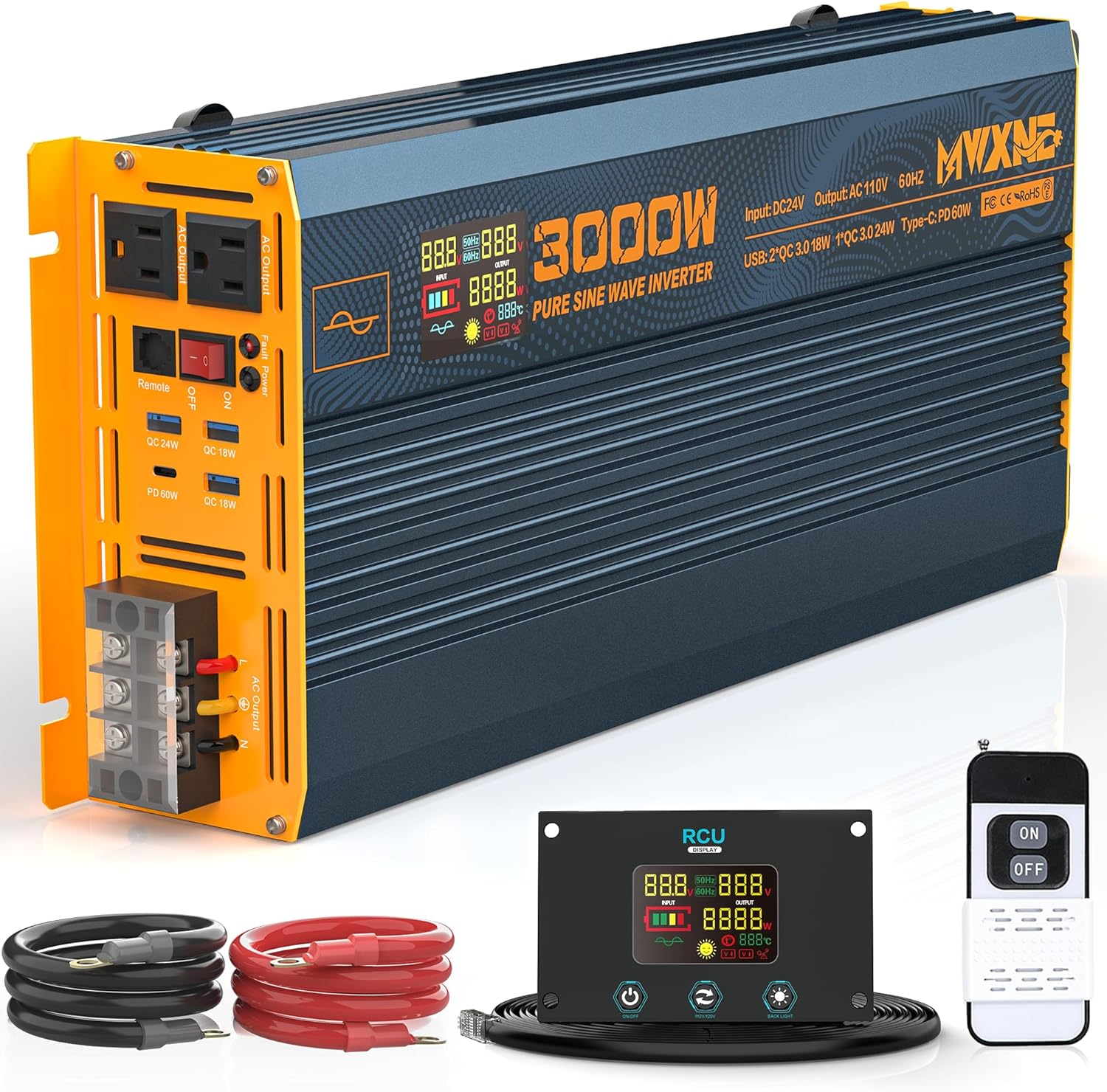 MWXNE 3000W Pure Sine
|
Premium | 3000W pure sine output | High-draw tailgates & RVs (24V) | Check Price | ||
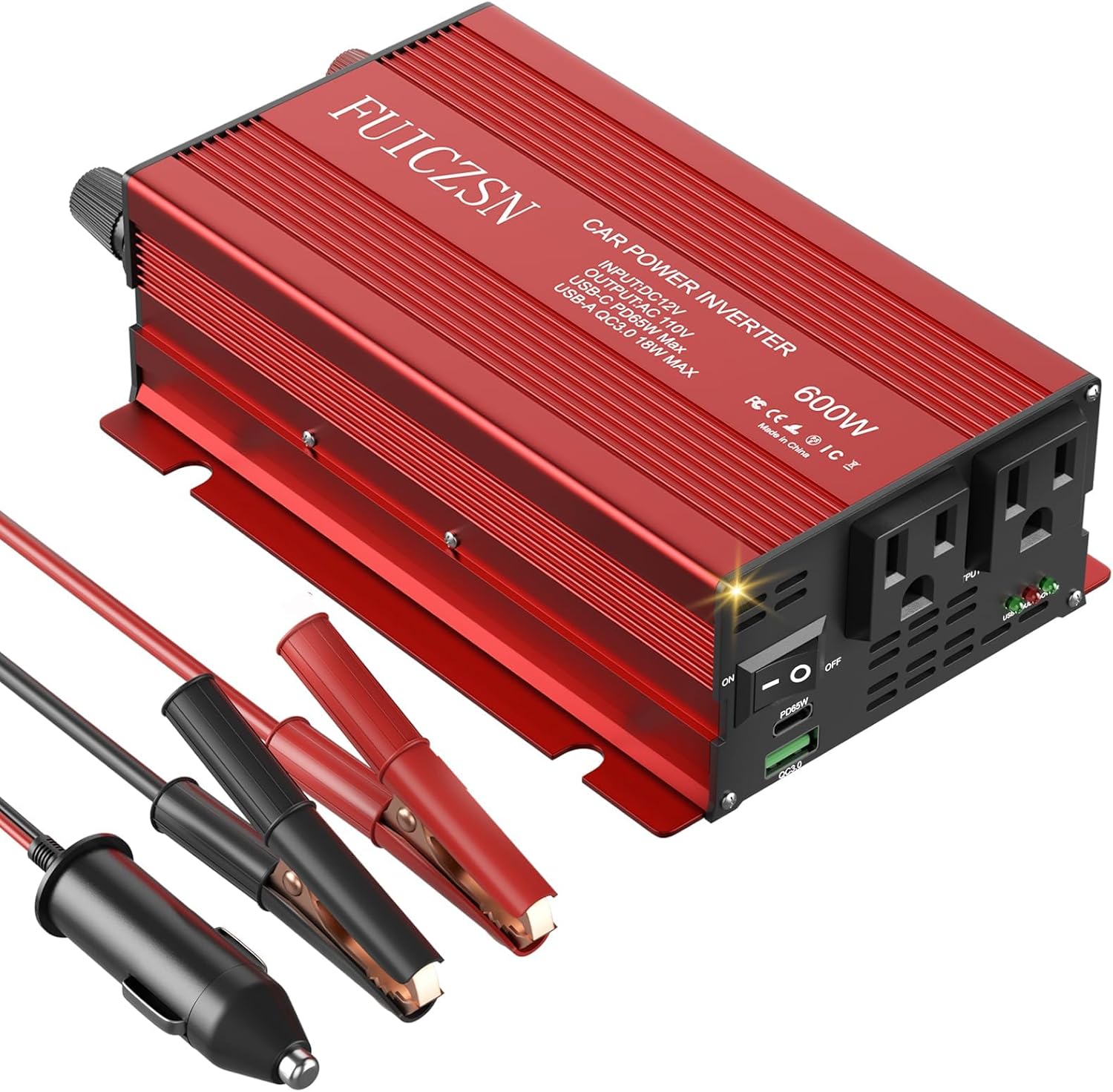 FUICZSN 600W Car Plug
|
Budget | Cigarette-plug + battery clips | Light tailgates, phones, laptops under 300W | Check Price | ||
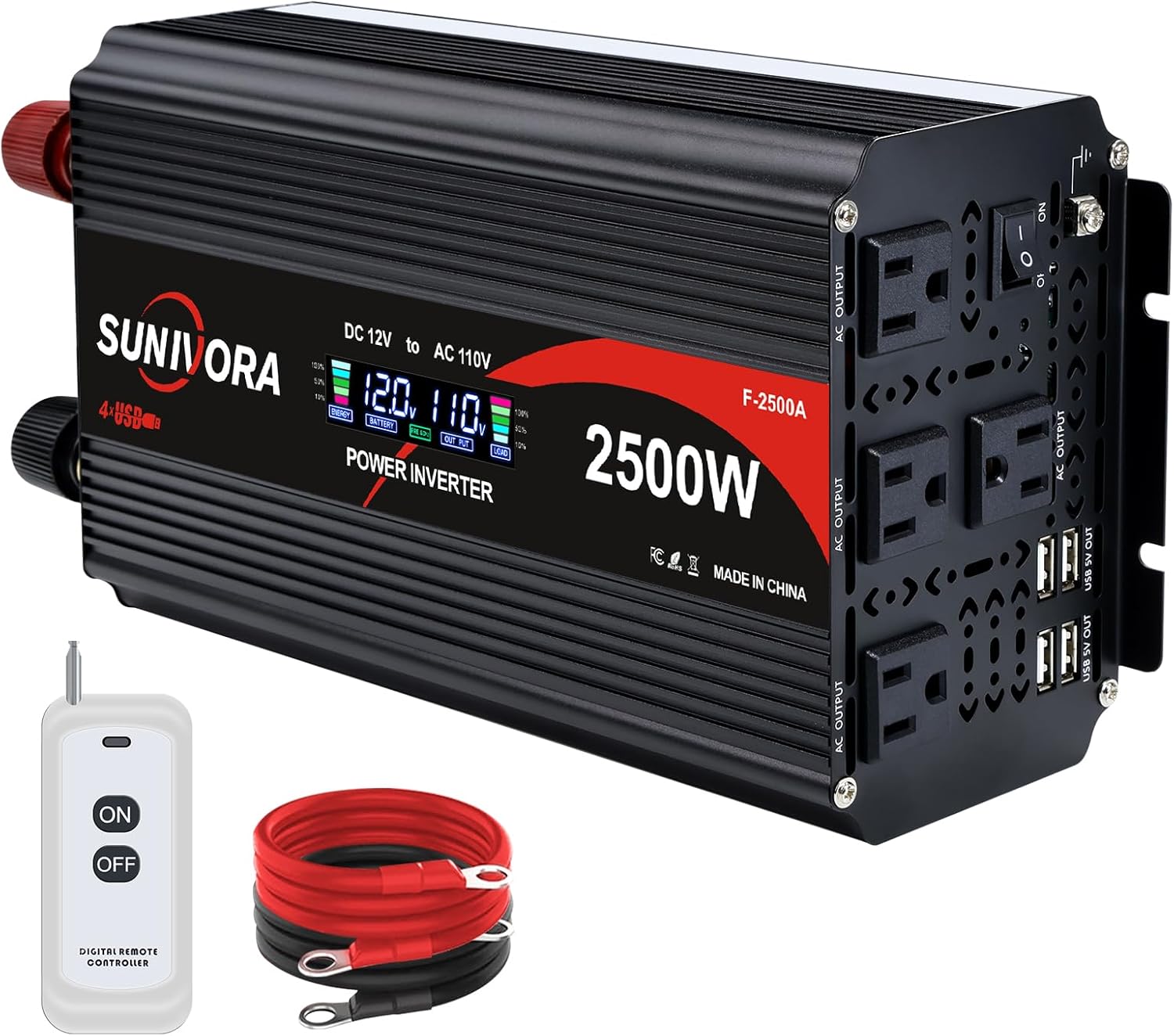 Sunivora 2500W Inverter
|
Mid-Range | 2500W continuous, 5000W peak | Mid-power tailgates on 12V systems | Check Price |
1. 3000W Pure Sine Wave Power Inverter DC 24V to 110V 120V AC with 4 Quick Charging USB Ports& Dual AC Outlets Power Inverters for Vehicles RV Truck Home with LCD Display and Remote Controller
A high-output pure sine inverter designed for 24V systems, the MWXNE provides large continuous power, multiple fast-charge USB ports and a clear LCD with wired/wireless remote control. Customers praise build quality and ease of setup, while a few report mixed long-term durability — overall it’s the strongest performer for heavy tailgate loads.
Key Specs
- 3000W continuous pure sine output (DC 24V → 110/120V AC)
- 4 USB ports including 60W USB-C PD and multiple USB-A
- LCD display with voltage/protection readouts and wired/wireless remote
- Safety protections: under/over-voltage, overload, overheat, short circuit
- Includes battery cables, fuses, earth wire and 24-month warranty
Pros
- Higher continuous power than the other models
- Better display & remote control than budget car plug inverters
- Stronger perceived build quality and easier setup than budget option
Cons
- Mixed reports on long-term durability compared with simpler units
- 24V input limits use in standard 12V cars without an appropriate battery or step-up
Best For: High-draw tailgates & RVs (24V)
Check Latest Price on Amazon2. 600W Car Power Inverter 12V DC to 110V AC Car Plug Adapter Outlet Converter with 2 AC Outlets and 65W PD USB-C & 18W QC USB-A Fast Charging Ports Power Inverters for Vehicles(Red)
A compact, budget-focused inverter that works from a 12V cigarette lighter for small loads or from battery clips for up to 600W. Shoppers like the portability and charging speed, but multiple users report noisy cooling fans and mixed durability—still an excellent low-cost option for simple tailgate needs.
Key Specs
- 600W continuous, 800W peak (12V DC)
- Dual 110V AC sockets plus 65W PD USB-C and 18W QC USB-A
- Dual connection: cigarette-lighter for <300W and alligator clips for higher loads
- Built-in protections: short-circuit, overload, low/high voltage, over-temperature
- Intelligent cooling fan with automatic speed control
Pros
- More portable and lighter than the larger inverters
- Best budget choice for basic tailgate charging and small appliances
- Fast-charging USB-C PD for modern devices
Cons
- Cooling fan noise reported louder than the other models
- Durability and potential stress on vehicle electrical systems reported by some users
Best For: Light tailgates, phones, laptops under 300W
Check Latest Price on Amazon3. 2500 Watt Inverter with LCD & Remote Control 12V DC to 110V/120V AC 60HZ Power Converter 5000W(Peak) with 4 Sockets & 4 USB Ports Power Inverters for Vehicles RV Truck Camping
Sunivora delivers a roomy mid-range option with four AC outlets, four USB ports, LCD status and error-code diagnostics. It offers high continuous and peak power for a 12V inverter and clear troubleshooting codes, making it a practical choice for tailgaters who need more than a small car-plug unit but don’t require the highest 24V outputs.
Key Specs
- 2500W continuous, 5000W peak (DC 12V → 110/120V AC)
- 4 AC outlets and 4 USB ports (3.4A each)
- LCD display with input/output/battery status and error codes
- Two temperature-controlled fans for cooling
- Includes battery cables and remote control
Pros
- Higher continuous power than budget car plug inverters
- Clear LCD diagnostics and error codes for easier troubleshooting
- Best mid-range balance of outlets and power for 12V vehicles
Cons
- Less portable than the compact car-plug unit
- Dual fans may produce noticeable noise under heavy load
Best For: Mid-power tailgates on 12V systems
Check Latest Price on AmazonWhich One Should You Choose?
If budget is tight and your tailgate needs are modest (phones, LED lights, a small speaker), choose the FUICZSN 600W car inverter — it’s the most portable and lowest-cost option for basic charging and light appliances. If you run a mix of mid-level gear (mini-fridge, TV, multiple outlets) on a 12V vehicle, the Sunivora 2500W is the best mid-range pick — it balances power, multiple outlets and helpful LCD diagnostics. If you need the most reliable, high-output and pure-sine power for heavy tailgate setups or sensitive devices and you have a 24V system (or a truck/RV setup to match), pick the MWXNE 3000W — it delivers the highest continuous output and advanced monitoring/control features.
Best for Specific Scenarios
- Tailgate party with speakers & mini-fridge: MWXNE 3000W if your vehicle supports 24V — best for high continuous and surge needs; otherwise Sunivora 2500W on a 12V truck.
- Quick meetups and phone/laptop charging: FUICZSN 600W — very portable and plugs into a cigarette lighter for fast setup.
- Multi-outlet convenience and diagnostics: Sunivora 2500W — lots of AC outlets, USBs and an LCD with error codes to keep things running smoothly.
Frequently Asked Questions
Can I run a mini-fridge and speakers at a tailgate?
Yes—if the combined continuous draw of the fridge and speakers is below the inverter’s continuous rating and the inverter can handle startup surges. For heavy draws choose a high continuous and high peak inverter (Sunivora 2500W or MWXNE 3000W depending on your vehicle voltage).
Do I need a pure sine inverter for tailgates?
Pure sine is recommended if you’ll run sensitive electronics (CPAP, laptops, some TVs and audio gear). It’s cleaner and safer for devices; budget modified-sine units are fine for basic charging and simple lamps.
Is cigarette-lighter connection safe for long tailgate sessions?
Cigarette-lighter ports typically support only small loads (often under ~300W) and can overheat if used for long high-current runs. For sustained or higher-power use, connect the inverter directly to the battery with proper cables.
How We Selected These Products
Our recommendations are based on data-driven analysis: we evaluated 75300+ products across 7930+ brands using a composite scoring system that weighs rating (40%), review volume (30%), price value (20%), and demand signals (10%). Every product is ranked by data, not opinions.
Last updated: May 22, 2026
As an Amazon Associate we earn from qualifying purchases at no extra cost to you. Full disclosure.
GarageGist Score is our editorial ranking based on a composite analysis of product quality, value, and verified customer sentiment. Click through to Amazon for current pricing, availability, and live customer reviews.