As an Amazon Associate we earn from qualifying purchases. Learn more.
Pad-Rotor Combo Kits vs Separate Parts (2026)
Replacing brakes brings a key choice: buy a matched pad-rotor combo kit or source pads, rotors and calipers separately. This article compares three TRQ pad-rotor combo kits across cost, fit, convenience and real-world durability so you can decide whether a kit makes sense for your car. We selected these kits for their direct-fit design, range of materials (ceramic and semi-metallic), rotor coatings, and customer feedback on fit and installation. Read on to see side-by-side strengths, a detailed buying guide, and clear recommendations based on common garage and driving scenarios.
Quick Answer
For most DIY drivers who want a balanced mix of value, fit and a performance boost, the TRQ Premium G-Coated Slotted X Drilled Semi-Metallic Kit (ASIN B0B7GKK95Q) is the best overall—it pairs slotted/drilled G-coated rotors with semi-metallic pads for improved stopping and rust protection. If you want a complete, economical refresh with calipers included, the TRQ Ceramic Complete Kit (ASIN B0D1XJMQHK) is the better value pick.
Our Top Picks
Quick Comparison
Select 2-3 products to compare side-by-side
| Compare | Product | GarageGist Score | Price Tier | Key Feature | Best For | Action |
|---|---|---|---|---|---|---|
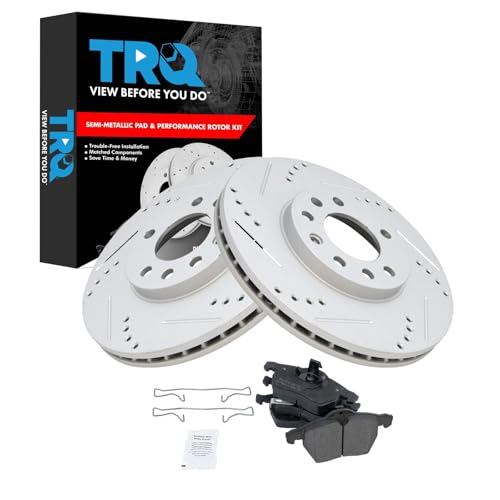 TRQ Slotted G-Coated Kit
|
Mid-Range | Slotted & drilled G-coated rotors | Drivers wanting performance + rust protection | Check Price | ||
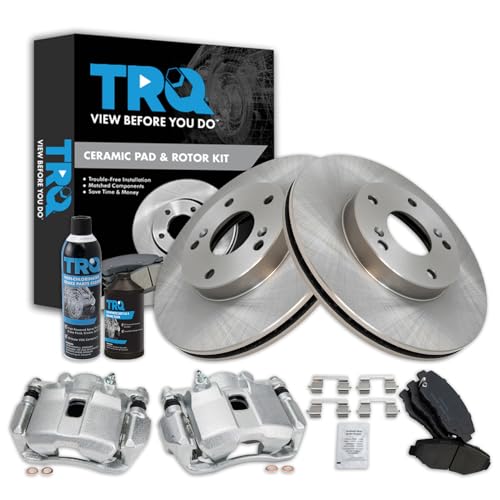 TRQ Complete Ceramic Kit
|
Mid-Range | Complete kit with calipers & chemicals | DIYers replacing pads, rotors and calipers at once | Check Price | ||
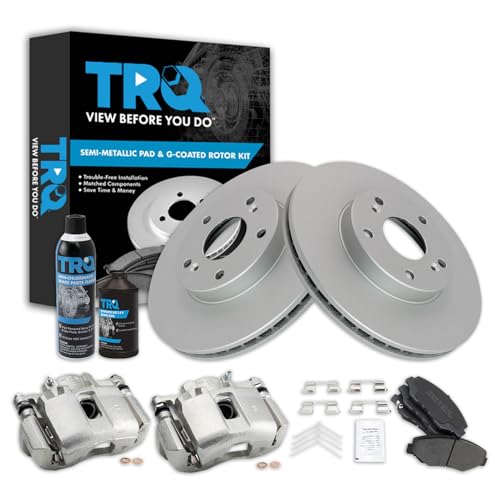 TRQ Premium G-Coated Kit
|
Premium | Premium G-Coated rotors with semi-metallic pads | Owners who prioritize rust protection and longer rotor life | Check Price |
1. TRQ Front Brake Pad & Rotor Kit Premium G-Coated Slotted X Drilled Semi-Metallic Compatible with 1999 Saab 9-5 2001-2002 Saturn L100 2001-2003 L200 2001-2005 L300 2000 LS LS1 LS2 LW1 LW2 LW200 LW300
This kit pairs semi-metallic pads with slotted, drilled, G-coated rotors for better heat management and long-term corrosion resistance. It’s the strongest all-around option for drivers who want improved bite and lower surface rust, with the direct-fit design easing installation.
Key Specs
- Brake pad friction: Semi-metallic
- Rotor finish: Slotted X Drilled, Premium G-Coated
- Rotor diameter: 11.34 in (288mm)
- Grade type: Performance; vented rotors
Pros
- Better corrosion resistance than non-coated rotors thanks to G-coating
- Improved heat dissipation and stopping performance from slotted/drilled design
- Direct-fit design makes installation faster than mixing parts
Cons
- Mid-Range price—higher than a basic pad-and-rotor pair
- Pad durability has mixed reports under aggressive use
Best For: Drivers wanting performance + rust protection
Check Latest Price on Amazon2. TRQ Front Brake Pad & Rotor Kit Brake Caliper Brake Chemical Kit Brake Pads Brake Rotor Ceramic Compatible with 2013-2014 Honda Fit
A full ceramic pad-rotor-caliper kit that includes brake cleaner and fluid—handy for a front-end overhaul. Ceramic pads mean less dust and quiet operation, and customers consistently praise the fit and ease of installation.
Key Specs
- Brake pad friction: Ceramic
- Includes: Front pad set, rotors, calipers, brake cleaner & fluid
- Rotor finish: Non-directional finish to reduce break-in vibrations
- Pad construction: Positive molded with multi-layer shims
Pros
- More complete than buying parts separately—saves sourcing time
- Quieter, lower-dust ceramic pads compared with many semi-metallic options
- Customers commonly report precise fit and straightforward installation
Cons
- Durability is mixed—some users report shorter pad life in heavy use
- Ceramic pads sacrifice some high-heat fade resistance compared with semi-metallic
Best For: DIYers replacing pads, rotors and calipers at once
Check Latest Price on Amazon3. TRQ Front Brake Pad & Rotor Kit Brake Caliper Brake Chemical Kit Brake Pads Brake Rotor Semi-Metallic Premium G-Coated Compatible with 2003-2004 Honda Accord
A premium option that uses electrostatic G-coating on rotors for longer rust protection and semi-metallic pads for stronger stopping. The kit is built for direct-fit replacement and aims to deliver long service life and lower rotor corrosion.
Key Specs
- Brake pad friction: Semi-metallic
- Rotor coating: Premium G-Coated with electrostatic application
- Includes: Pads, calipers, premium rotors, brake cleaner & fluid
- Design focus: Reduced noise and improved wear resistance
Pros
- Superior rust protection compared with uncoated kits
- Pre-assembled direct-fit components speed installation versus mixing parts
- Semi-metallic pads perform better for higher-load braking than ceramic
Cons
- Premium price tier—costlier than mid-range combos
- Some customers still report variable pad durability under heavy use
Best For: Owners who prioritize rust protection and longer rotor life
Check Latest Price on AmazonWhich One Should You Choose?
If you want the best all-around mix of stopping performance, heat control and corrosion resistance → choose the TRQ Premium G-Coated Slotted X Drilled Semi-Metallic Kit (ASIN B0B7GKK95Q). Its slotted/drilled rotors and G-coating make it the strongest pick for drivers who push their brakes harder or want better long-term rotor condition.
If budget and complete convenience are your priority (you want pads, rotors and calipers in one box) → choose the TRQ Complete Ceramic Kit (ASIN B0D1XJMQHK). It’s a practical value pick with quieter, low-dust ceramic pads and everything needed for a front-end refresh.
If you prioritize rust protection and a premium finish for exposed wheels and longer rotor life → choose the TRQ Semi-Metallic Premium G-Coated Kit (ASIN B0D1MPSGB4). It carries the premium rotor coating and semi-metallic pads that handle heat better than ceramic for heavier use.
Best for Specific Scenarios
- Daily commuter in wet/salty climates: TRQ Semi-Metallic Premium G-Coated Kit (B0D1MPSGB4) because the electrostatic G-coating reduces surface rust and keeps rotors looking and performing better longer.
- DIYer doing a full front brake overhaul: TRQ Complete Ceramic Kit (B0D1XJMQHK) because it includes calipers, cleaner and fluid—one purchase covers the whole job.
- Weekend driver who wants better stopping and cooling: TRQ Slotted G-Coated Kit (B0B7GKK95Q) because slotted/drilled rotors and semi-metallic pads improve heat dissipation and initial bite versus plain rotors.
Frequently Asked Questions
When does buying a pad-rotor kit make more sense than separate parts?
Buy a kit when you need both pads and rotors (or calipers) at once—kits save time sourcing compatible parts and often cost less than buying equivalent individual components. If rotors are still within thickness and surface spec, buy pads alone instead.
Are ceramic pads in kits quieter than semi-metallic?
Yes—ceramic pads generally run quieter and produce less brake dust than semi-metallic pads, making them a good choice for street-driven cars. Semi-metallic pads offer better high-heat performance for heavy or spirited driving.
Do coated rotors (G-coated) matter?
Coated rotors resist surface rust on the hat and exposed areas, which matters if your wheels show the rotor or you live where salt accelerates corrosion. Coatings don't change stopping power much but help rotor longevity and appearance.
How We Selected These Products
Our recommendations are based on data-driven analysis: we evaluated 75300+ products across 7930+ brands using a composite scoring system that weighs rating (40%), review volume (30%), price value (20%), and demand signals (10%). Every product is ranked by data, not opinions.
Last updated: September 01, 2026
As an Amazon Associate we earn from qualifying purchases at no extra cost to you. Full disclosure.
GarageGist Score is our editorial ranking based on a composite analysis of product quality, value, and verified customer sentiment. Click through to Amazon for current pricing, availability, and live customer reviews.