As an Amazon Associate we earn from qualifying purchases. Learn more.
Front vs Rear vs Full-Axle Brake Kits: Which to Buy First (2026)
If you’re planning phased brake upgrades in 2026 — starting with front, rear, or replacing a full axle — this guide helps you choose by cost, safety, and overall value. You’ll learn when it makes sense to replace just the front or rear, how ceramic vs semi‑metallic pads affect noise and dust, and which TRQ kits offer the best ROI for daily drivers, tow vehicles, and budget DIYers. We selected these kits based on fit, included hardware/chemicals, materials (ceramic vs semi‑metallic), rotor protection (G‑coating), and real customer feedback about installation, fit, braking quality, and durability.
Quick Answer
For most drivers who want a safe, low-dust upgrade first, buy the TRQ Front Brake Pad & Rotor Kit (B09STH1RW1). It delivers ceramic pads, G-coated rotors and included brake chemicals for a premium front-first upgrade; budget shoppers should choose the TRQ Front Metallic kit (B0B5ZCVSVL).
Our Top Picks
Quick Comparison
Select 2-3 products to compare side-by-side
| Compare | Product | GarageGist Score | Price Tier | Key Feature | Best For | Action |
|---|---|---|---|---|---|---|
 TRQ Front Ceramic G-Coated |
Premium | Ceramic pads + premium G‑coated rotors | Drivers who want quiet, low‑dust front upgrade | Check Price | ||
 TRQ Front Metallic G‑Coated |
Budget | Semi‑metallic pads with G‑coated rotors | Budget DIYers and smaller cars (Volvo/Ford fitments) | Check Price | ||
 TRQ Tacoma Semi‑Metallic |
Mid-Range | Application-specific semi‑metallic pads with non‑directional rotors | Tacoma owners who want a balanced upgrade | Check Price |
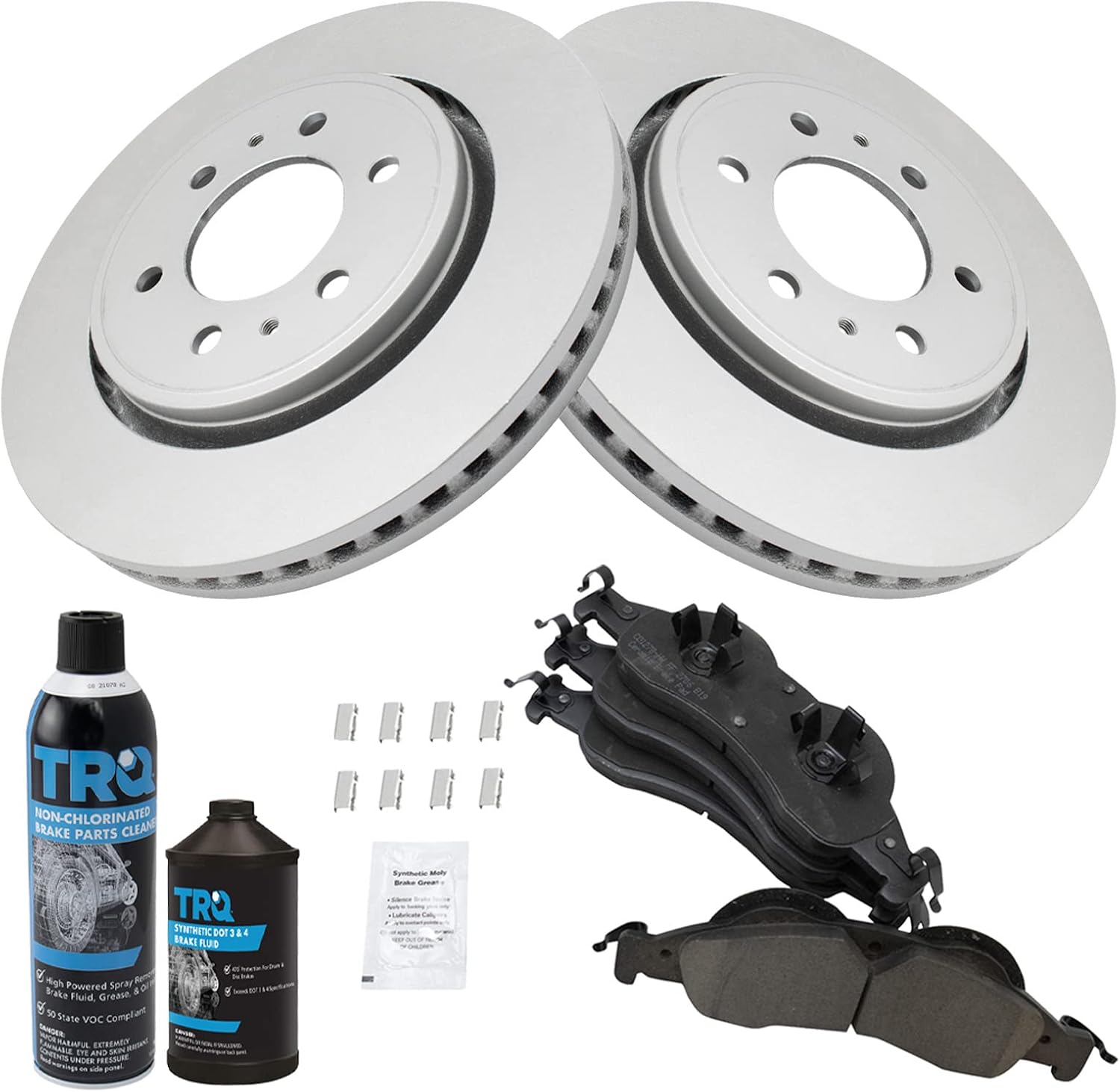
1. TRQ Front Brake Pad & Rotor Kit Brake Chemical Kit Brake Pads Brake Rotor Ceramic Premium G-Coated Compatible with 2007-2009 Ford Expedition Lincoln Navigator
A premium front-axle kit that pairs ceramic pads with G-coated rotors and includes brake cleaner and DOT fluid. Customers praise fit, quiet braking and reduced dust; durability reports are mixed so this is best when you prioritize noise, cleanliness and corrosion resistance up front.
Key Specs
- Brake pad material: Ceramic (positive molded)
- Front rotor diameter: 13.78 in (350 mm)
- Brake rotor coating: Premium G‑Coated (electrostatic)
- Includes: Brake cleaner and DOT 3/4 brake fluid
Pros
- Quieter and lower dust than the semi‑metallic kits
- Better long‑term rust protection (G‑coating) than the Tacoma kit
- Includes chemicals and is designed for direct fit and easy DIY install
Cons
- Higher price tier than the budget option
- Durability is mixed in some reports compared with expectations
Best For: Drivers who want quiet, low‑dust front upgrade
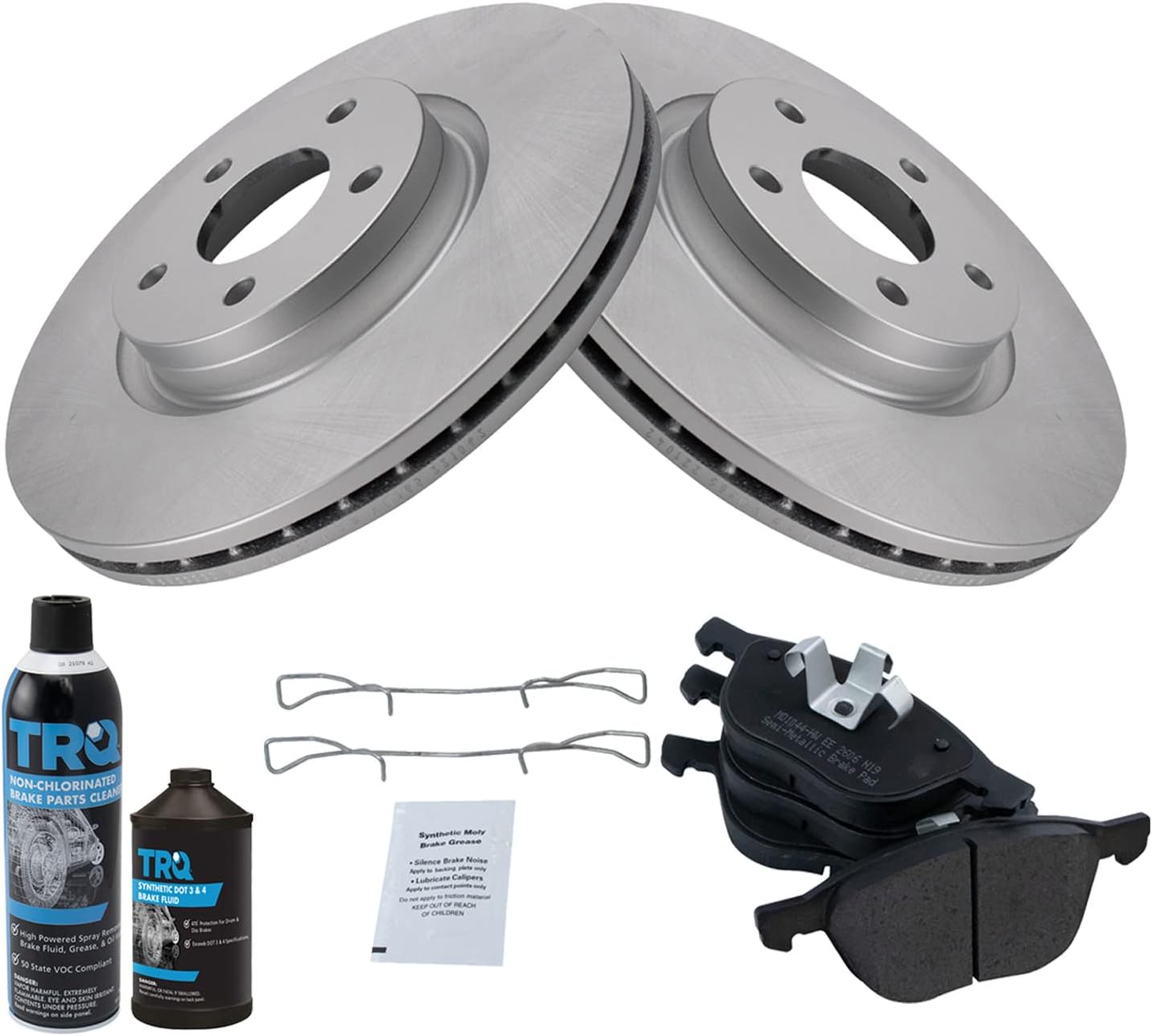
Check Latest Price on Amazon2. TRQ Front Metallic Brake Pad & Coated Rotor Kit w/Chemicals Compatible with C30 C70 S40 V50
A budget‑friendly front kit that still includes G‑coated rotors, semi‑metallic pads, hardware and chemicals. Shoppers report good fit and quiet operation for the price, making it a solid front-first pick where cost matters most.
Key Specs
- Brake pad material: Semi‑metallic
- Front rotor diameter: 11.81 in (300 mm)
- Brake rotor coating: Premium G‑Coated
- Includes: Contact point grease, hardware, brake cleaner and DOT 3/4 fluid
Pros
- Better value up front than premium ceramic options
- Direct fit with hardware included makes installation easier than buying parts separately
- G‑coated rotors give better rust resistance than uncoated rotors
Cons
- Semi‑metallic pads typically produce more dust than ceramic options
- Durability reports are mixed — some users report shorter service life
Best For: Budget DIYers and smaller cars (Volvo/Ford fitments)
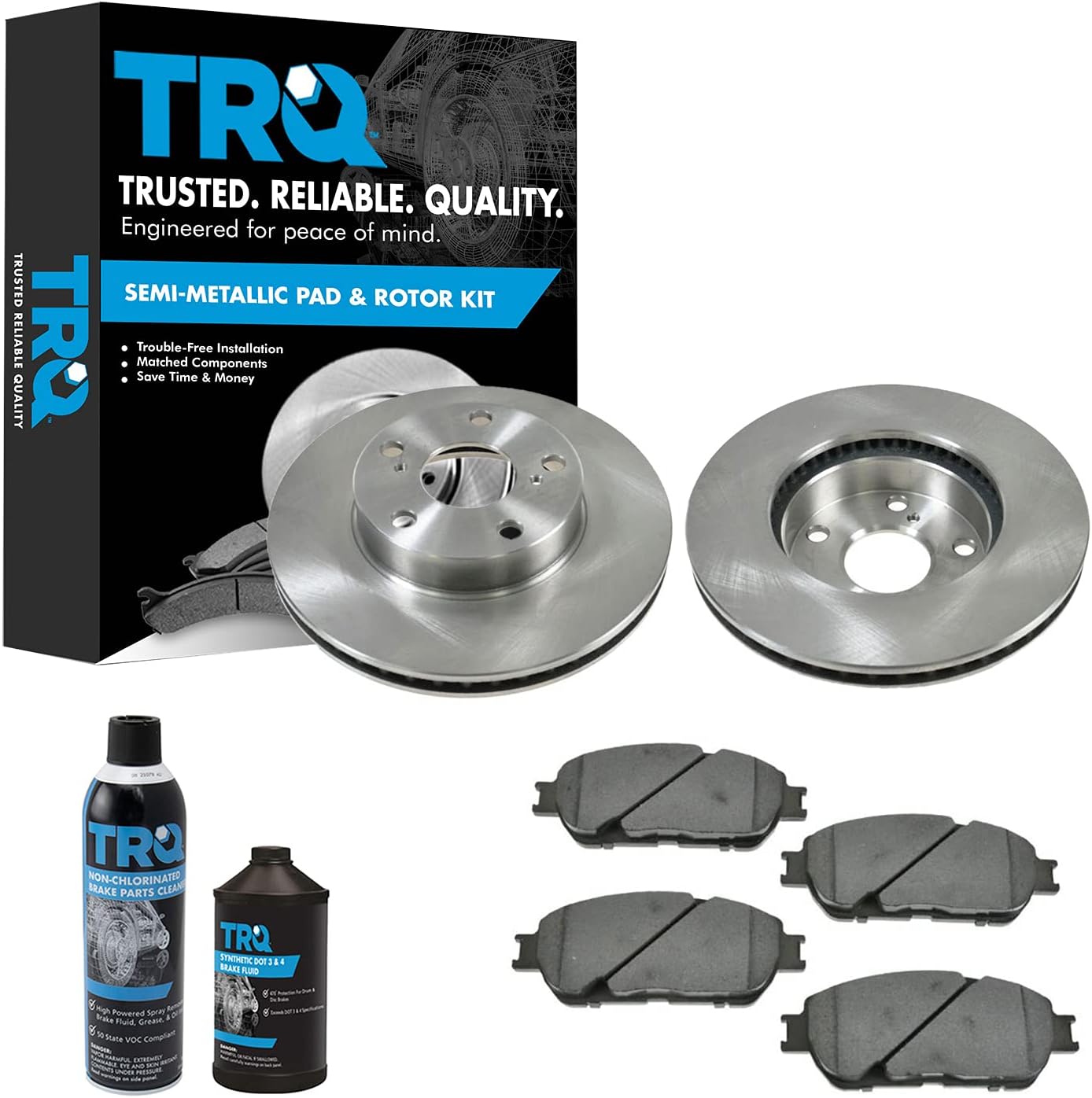
Check Latest Price on Amazon3. TRQ Front Brake Pad & Rotor Kit Brake Chemical Kit Brake Pads Brake Rotor Semi-Metallic Compatible with 2005-2015 Toyota Tacoma
A mid‑range front kit tuned for Toyota Tacoma fitment. The rotors’ non‑directional finish reduces break‑in vibration, and the kit includes the fluids and hardware needed for a straightforward replacement. It’s a balanced choice for truck owners who want solid braking without premium ceramic cost.
Key Specs
- Brake pad material: Semi‑metallic
- Front rotor diameter: 10.83 in (275 mm)
- Rotor finish: Non‑directional for reduced break‑in time and vibration
- Includes: Brake cleaner and DOT 3/4 brake fluid
Pros
- Balanced cost-to-performance for truck use compared with premium ceramic kits
- Non‑directional rotors minimize early vibration during bedding
- Good direct fit and straightforward installation for Tacoma models
Cons
- Rotor lacks the premium G‑coating seen on other TRQ kits, so less corrosion resistance
- Durability feedback is mixed across users
Best For: Tacoma owners who want a balanced upgrade
Check Latest Price on AmazonWhich One Should You Choose?
If your priority is the safest, cleanest front upgrade and budget allows → TRQ Front Ceramic G‑Coated Kit (B09STH1RW1). It delivers ceramic pads, premium G‑coated rotors, and included chemicals that make a front-first upgrade feel premium. If budget is tight and you want the best value for routine driving → TRQ Front Metallic G‑Coated Kit (B0B5ZCVSVL); it keeps costs down while still providing G‑coated rotors and hardware. If you drive a Tacoma or need a balanced truck-oriented choice → TRQ Tacoma Semi‑Metallic Kit (B09HNLXV9L) for a mid‑range option with non‑directional rotors that reduce break‑in vibration. Generally, replace front axle first for most drivers; choose full‑axle only if rear wear is evident, you tow often, or you want matched front/rear braking feel immediately.
Best for Specific Scenarios
- Daily commuter who wants low dust: TRQ Front Ceramic G‑Coated (B09STH1RW1) because ceramic pads cut dust and are quieter than semi‑metallic options.
- Budget DIYer replacing front pads/rotors: TRQ Front Metallic G‑Coated (B0B5ZCVSVL) because it includes hardware and chemicals at a lower price tier.
- Tacoma owner or light truck use: TRQ Tacoma Semi‑Metallic (B09HNLXV9L) because the kit is application‑specific with non‑directional rotors to reduce early vibration and deliver balanced truck braking.
Frequently Asked Questions
Should I replace front or rear brakes first?
Replace the front first in most cases — front pads and rotors take the bulk of braking force and wear faster. Replace the rear or do a full‑axle swap if rear components are worn, you tow frequently, or if you need fully balanced pedal feel immediately.
Are ceramic pads better than semi‑metallic?
Ceramic pads are generally quieter and produce less dust, which keeps wheels cleaner; semi‑metallic pads are often more affordable and can offer stronger initial bite under heavy loads. Choose ceramic for noise and clean wheels, semi‑metallic for cost and heavy‑duty use.
How important is a G‑coated rotor?
G‑coating (electrostatic coatings) helps reduce surface rust on rotor hats and exposed edges, improving appearance and slowing corrosion. It’s most valuable if you live in wet or salted‑road climates or have wheels that expose the rotor hat.
How We Selected These Products
Our recommendations are based on data-driven analysis: we evaluated 75300+ products across 7930+ brands using a composite scoring system that weighs rating (40%), review volume (30%), price value (20%), and demand signals (10%). Every product is ranked by data, not opinions.
Last updated: October 19, 2026
As an Amazon Associate we earn from qualifying purchases at no extra cost to you. Full disclosure.
GarageGist Score is our editorial ranking based on a composite analysis of product quality, value, and verified customer sentiment. Click through to Amazon for current pricing, availability, and live customer reviews.