As an Amazon Associate we earn from qualifying purchases. Learn more.
Diagnose and Fix a Spongy Brake Pedal (2026 Guide)
If your brake pedal feels soft or spongy, driving is stressful and unsafe. This guide is for DIYers and home mechanics who want step-by-step fixes — from quick checks to full brake bleeding — and the right tools to get the job done. You’ll learn how to diagnose whether the issue is air, fluid contamination, or a leak; how to bleed brakes (including ABS-aware options); and which tools and parts work best. Products were selected for real-world fit: effectiveness for removing air, build quality, ease of use, and value across budget tiers based on manufacturer specs and user feedback.
Quick Answer
A spongy brake pedal usually means air in the hydraulic lines, contaminated fluid, or a leak; the quickest reliable fix is a proper bleed and fluid flush. For a one-person professional-style bleed we recommend the Mityvac MV6840 pressure bleeding system (B005MVBFM4) because its reservoir, adapters and pressure control let you force fluid through and purge air hands-free.
Our Top Picks
Quick Comparison
Select 2-3 products to compare side-by-side
| Compare | Product | GarageGist Score | Price Tier | Key Feature | Best For | Action |
|---|---|---|---|---|---|---|
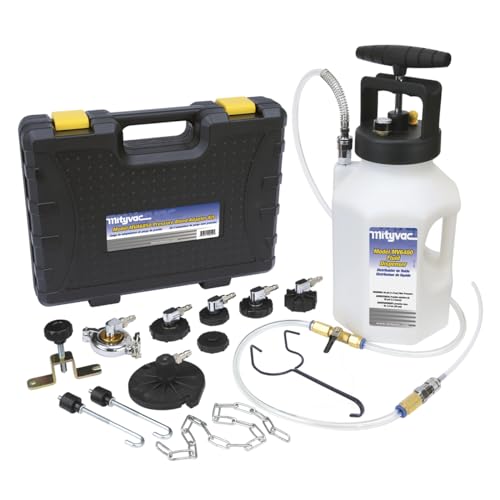 Mityvac MV6840 Pressure Bleeder
|
Premium | 1.2 gal pressurized reservoir | One-person professional-style bleeding | Check Price | ||
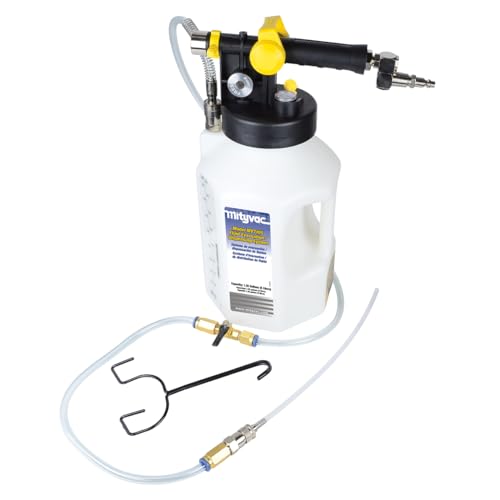 Mityvac MV7105 Extractor
|
Mid-Range | Venturi vacuum + positive pressure | Shops that need multi-fluid evac/dispense | Check Price | ||
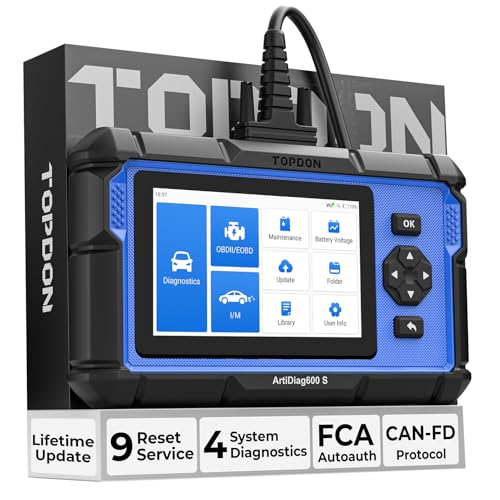 TOPDON AD600S Scanner
|
Premium | ABS bleeding + 9 reset services | Diagnosing ABS/electronic brake issues | Check Price | ||
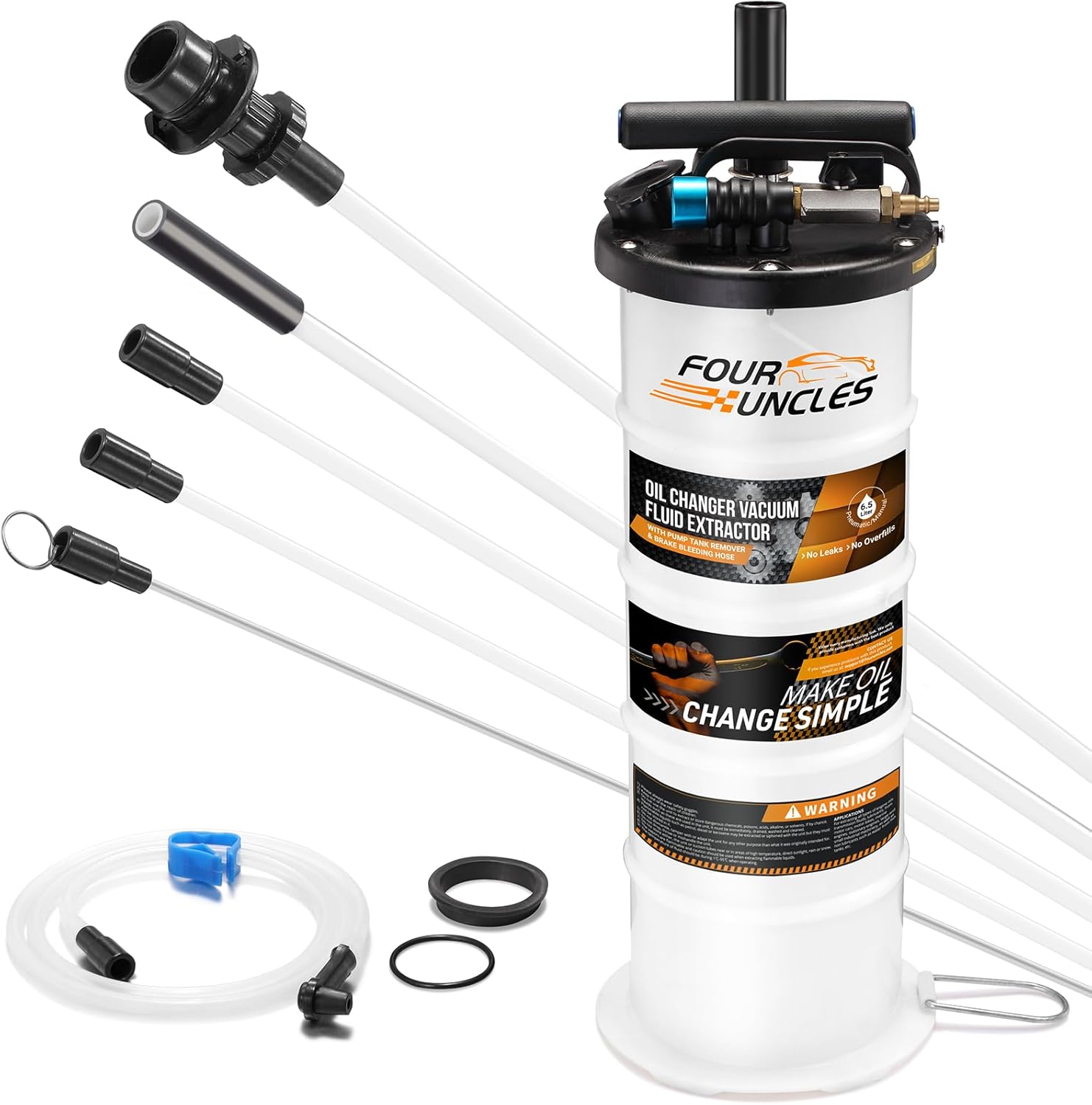 FOUR UNCLES 6.5L Extractor
|
Budget | 6.5L dual-mode extraction | Occasional home garage use | Check Price |
1. Mityvac MV6840 Hydraulic Brake and Clutch Pressure Bleeding System, Includes Seven (7) Master Cylinder Adapters, 1.2 Gallon Reservoir, Quick-Change Connections Pressure Relief Valve, Storage Case
A heavy-duty pressure bleeder built for hands-free brake/fluid exchange. The large reservoir and seven master cylinder adapters make it versatile for many vehicle types and let a single user apply consistent pressure to purge air and old fluid.
Key Specs
- 1.2 gallon (4.5 L) fluid reservoir
- Includes 7 master cylinder adapters
- Pressure gauge and relief valve
- Quick-change connectors; storage case
Pros
- Professional-grade bleeding with hands-free operation
- Large reservoir reduces refill interruptions on multiple brakes
- Multiple adapters improve fit across many vehicles
Cons
- Some users report occasional leakage issues
- A few vehicles need custom adapter fit (compatibility varies)
Best For: One-person professional-style bleeding
Check Latest Price on Amazon2. Mityvac MV7105 Fluid Extractor Dispenser for Evacuating, Topping-Off, Refilling Reservoirs or Bleeding Hydraulic Brake/Clutch Systems, 1.2 Gallon, 120 PSI, Compressed Air, Vacuum or Positive Pressure
A versatile pneumatic fluid extractor/dispenser that switches between vacuum and pressure modes. Useful for evacuating or topping-off reservoirs and for pressure-bleeding brakes when you want a compact, multi-application unit.
Key Specs
- 1.2 gallon (5 L) reservoir
- Operates up to 120 PSI via shop air (pressure controlled below 30 PSI for bleeding)
- Venturi vacuum lid and isolated flow control
- Includes gauge, suction hose and evacuation wand
Pros
- Versatile — works for brake, power steering, coolant and more
- Good pressure control for safe brake bleeding
- Well-sized for shop or garage use
Cons
- Some reports of leakage after extended use
- Mixed feedback on longevity/value in heavy-use settings
Best For: Shops that need multi-fluid evac/dispense
Check Latest Price on Amazon3. OBD2 Scanner TOPDON AD600S Scan Tool, Code Reader, Diagnostics Scanner for ABS/SRS/AT/Engine, 9 Reset Services, Oil/Brake/BMS/SAS/DPF/TPMS/ETS Reset/ABS Bleeding/Injector Coding, Free Lifetime Upgrade
A full-featured OBD2 scan tool that goes beyond code reading: it supports ABS bleeding, multiple reset services and live data. Use this when a spongy pedal may be linked to an ABS module, sensor fault, or when electronic service procedures are required.
Key Specs
- 9 reset services including ABS bleeding and brake reset
- Auto VIN, live data and waveform graphing
- One-click lifetime software updates (Wi‑Fi)
- Compatibility with 90+ brands (varies by model/year)
Pros
- Enables ABS-appropriate bleed procedures and system resets
- Comprehensive diagnostics save troubleshooting time
- Easy to read touchscreen and reporting features
Cons
- Wi‑Fi/update features receive mixed feedback on reliability
- Scan speed can vary between vehicles
Best For: Diagnosing ABS/electronic brake issues
Check Latest Price on Amazon4. FOUR UNCLES 6.5L Oil Extractor - Pneumatic/Manual Vacumm Fluid Extractor with Pump Tank Remover & 5 Tubes for Oil Change and a Brake Bleeding Hose for Brake Fluid Change
An affordable dual-mode extractor that handles oil changes and can be adapted for brake fluid removal. Its large tank and multiple tubes make fluid removal easy without getting under the car, a good value for lower-frequency users.
Key Specs
- 6.5 L capacity with pneumatic and manual modes
- Multiple tubes for deep-sump extraction
- Includes brake bleeding hose and pump
- Extraction speed up to ~1.8 L/min (pneumatic)
Pros
- Dual pneumatic/manual operation is flexible
- High capacity saves trips to dispose multiple fluids
- Very budget-friendly for basic tasks
Cons
- Durability concerns reported (valve/pump failures)
- Some leakage issues noted after repeated use
Best For: Occasional home garage use
Check Latest Price on AmazonWhich One Should You Choose?
If budget is tight → FOUR UNCLES 6.5L Extractor (B0CHRFDXV6). If you need a portable, multi-fluid tool for a garage → Mityvac MV7105 (B0B97V4T5H). If premium quality and one-person professional bleeding matters → Mityvac MV6840 (B005MVBFM4). If the spongy pedal seems tied to ABS or electronic faults → TOPDON AD600S scanner (B09KZTYD18).
Best for Specific Scenarios
- One-person professional bleed: Mityvac MV6840 because its pressurized reservoir, gauge and adapters let a single user purge lines hands-free.
- Multi-fluid shop use: Mityvac MV7105 because it switches between vacuum and positive pressure and handles brake, power steering and coolant tasks.
- Occasional home DIY: FOUR UNCLES 6.5L Extractor because it’s affordable, dual-mode and large capacity for oil and brake fluid jobs.
- ABS/electronic troubleshooting: TOPDON AD600S because it supports ABS bleeding procedures and diagnostic resets required after module servicing.
Frequently Asked Questions
What usually causes a spongy brake pedal?
Most often it’s air trapped in the hydraulic brake lines, contaminated or water-logged brake fluid that compresses under pressure, or a hydraulic leak. Air in the lines compresses and makes the pedal feel soft; fluid contamination reduces hydraulic efficiency.
Can I fix a spongy pedal by bleeding the brakes myself?
Yes — if the issue is air or old fluid, bleeding the brakes and flushing with new DOT-specified fluid will usually restore pedal firmness. Use the correct procedure for your vehicle (traditional bleed, vacuum bleed, or pressure bleed), follow torque and safety steps, and if ABS is involved run the manufacturer-recommended ABS bleed cycle or use a scan tool with ABS bleeding functionality.
How do I tell if I have a leak instead of just air in the lines?
Inspect around master cylinder, brake lines, calipers, wheel cylinders and hoses for fluid stains or low fluid level in the reservoir. A pedal that slowly sinks when held under pressure often indicates a leak or an internal master cylinder issue; immediate or repeat soft pedal after bleeding may also signal a component failure rather than trapped air.
When should I replace parts instead of just bleeding the system?
Replace hoses, calipers, wheel cylinders, or the master cylinder if you find visible leaks, cracked rubber, persistent fluid contamination, or if bleeding doesn’t restore pedal firmness. Also replace brake fluid regularly (per manufacturer interval) — dark or milky fluid indicates contamination and has limited ability to be fixed by bleeding alone.
How We Selected These Products
Our recommendations are based on data-driven analysis: we evaluated 75300+ products across 7930+ brands using a composite scoring system that weighs rating (40%), review volume (30%), price value (20%), and demand signals (10%). Every product is ranked by data, not opinions.
Last updated: October 05, 2026
As an Amazon Associate we earn from qualifying purchases at no extra cost to you. Full disclosure.
GarageGist Score is our editorial ranking based on a composite analysis of product quality, value, and verified customer sentiment. Click through to Amazon for current pricing, availability, and live customer reviews.