As an Amazon Associate we earn from qualifying purchases. Learn more.
Ceramic vs Zinc-Coated Brake Rotors: Which Stops Rust Better? (2026)
If you’re worried about fall surface rust eating at your rotors, this guide cuts through the jargon to compare ceramic/G‑coated rotors with conventional zinc‑coated options. You’ll learn how each coating handles corrosion, high heat, and long‑term value, and see three TRQ brake kits reviewed side‑by‑side so you can pick the right replacement. Products were selected for their corrosion treatments, pad material, real‑world customer feedback (fit, ease of install, durability), and how well they protect exposed rotor surfaces in everyday driving.
Quick Answer
Ceramic/G‑coated rotors generally beat basic zinc-plated rotors at resisting surface rust, especially on exposed rotor hats and vented faces. Our top pick for balanced corrosion resistance and value is the TRQ Front Performance Brake Pad & Rotor Kit (ASIN B09HN32X8D), which pairs ceramic pads with TRQ's premium G-coating.
Our Top Picks
Quick Comparison
Select 2-3 products to compare side-by-side
| Compare | Product | GarageGist Score | Price Tier | Key Feature | Best For | Action |
|---|---|---|---|---|---|---|
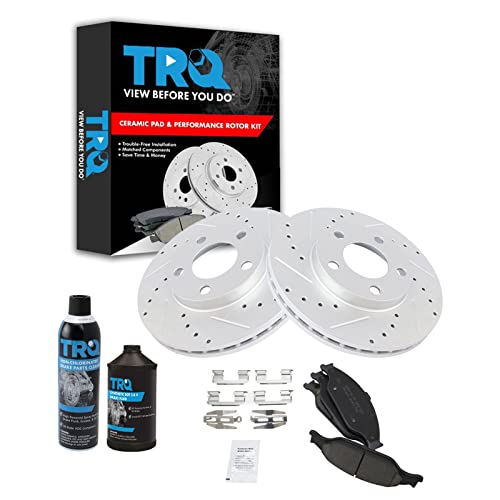 TRQ Mustang Performance Kit |
Mid-Range | Premium G‑coated rotors for rust prevention | Owners with exposed wheels looking to beat surface rust | Check Price | ||
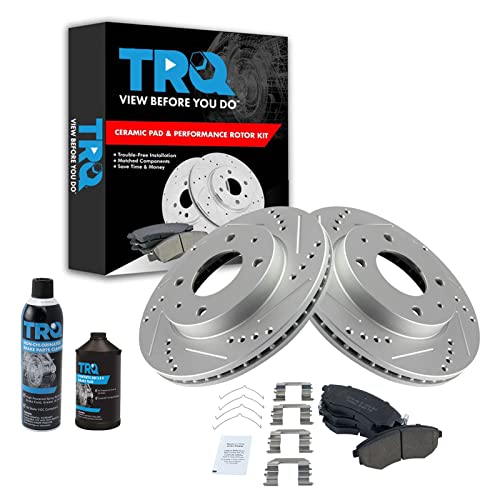 TRQ Hyundai Premium Kit |
Premium | Electrostatic G‑coating for longer rust resistance | Drivers who want premium coating and OE‑style fit | Check Price | ||
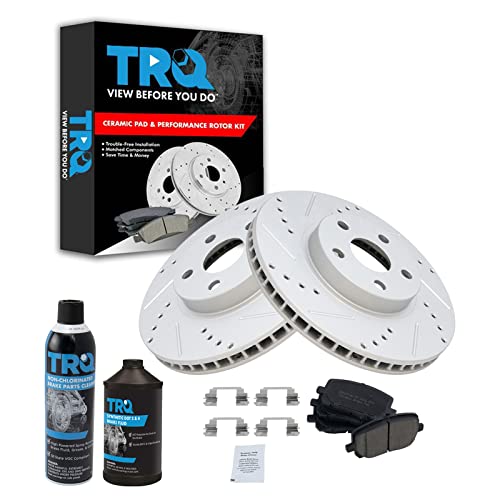 TRQ Corolla/Matrix Kit |
Budget | Budget-friendly kit with G‑coated rotors | Cost-conscious buyers needing a complete front brake kit | Check Price |
1. TRQ Front Performance Brake Pad & Rotor Kit Brake Chemical Kit Brake Pads Brake Rotors Set Ceramic Premium G-Coated Compatible with 1999-2004 Ford Mustang
A balanced kit that pairs ceramic pads with TRQ's electrostatic G‑coating on vented, slotted/drilled rotors. Customers praise fit and quiet braking; the kit also includes brake cleaner and fluid for a one‑stop replacement. Corrosion protection is a key selling point for wheels that expose the rotor face and hat.
Key Specs
- Brake Rotor Coating: Premium G‑Coated (electrostatic)
- Brake Pad Material: Ceramic (positive molded)
- Surface Type: Slotted X Drilled
- Rotor Venting: Vented; Diameter 276 mm
- Kit Includes: Brake cleaner & DOT 3/4 fluid
Pros
- Better surface-rust protection than plain zinc-plated rotors
- Direct-fit kit with parts and chemicals simplifies installation
- Ceramic pads produce less dust and run quietly compared with semi-metallic kits
Cons
- Mixed durability reports — some users see faster wear under heavy use
- Not as heavy-duty as some premium OEM or aftermarket performance rotors
Best For: Owners with exposed wheels looking to beat surface rust
Check Latest Price on Amazon2. TRQ Front Performance Brake Pad & Rotor Kit Brake Chemical Kit Brake Pads Brake Rotors Set Ceramic Premium G-Coated Compatible with 1998-2006 Hyundai Elantra 1999-2001 Sonata Tiburon
This TRQ premium option emphasizes long‑lasting G‑coated rotors paired with ceramic pads engineered for low dust and quiet performance. It’s pitched as a near‑OEM replacement with application‑specific design and pre-assembled components to reduce install time. Fits are generally praised, while long‑term durability gets mixed feedback from some owners.
Key Specs
- Brake Rotor Coating: Premium G‑Coated (electrostatic)
- Brake Pad Material: Ceramic (positive molded)
- Surface Type: Slotted X Drilled; Rotor Diameter 235 mm
- Product Line: Performance; Venting: Vented
- Includes: Brake cleaner & DOT 3/4 fluid
Pros
- Stronger rust protection and longer-lasting coating than bare/zinc-plated finishes
- Designed as a direct OE-style replacement for precise fit
- Ceramic pads reduce wheel dust and noise compared with many budget pads
Cons
- Premium tier cost may be higher than basic replacement rotors
- Some users report durability is inconsistent under aggressive driving
Best For: Drivers who want premium coating and OE‑style fit
Check Latest Price on Amazon3. TRQ Front Performance Brake Pad & Rotor Kit Brake Chemical Kit Brake Pads Brake Rotors Set Ceramic Premium G-Coated Compatible with 2003-2008 Pontiac Vibe Toyota Corolla Matrix
A budget-oriented TRQ kit that still includes ceramic pads and G‑coated rotors to resist surface rust better than untreated rotors. It’s a straight‑forward direct fit kit with basic accessories included, praised for ease of install and fit, though some buyers note mixed longevity depending on driving habits.
Key Specs
- Brake Rotor Coating: Premium G‑Coated
- Brake Pad Material: Ceramic
- Surface Type: Slotted X Drilled; Rotor Diameter 275 mm
- Kit Includes: Brake cleaner & DOT 3/4 fluid
- Product Line: Performance; Venting: Vented
Pros
- Better corrosion resistance than bare rotors and many simple zinc-plated options
- Lower cost while still including pads, rotors, and chemicals
- Direct fit and easy installation praised by customers
Cons
- Durability feedback is mixed — may need replacement sooner under heavy use
- Not optimized for track or heavy towing compared with higher-end performance rotors
Best For: Cost-conscious buyers needing a complete front brake kit
Check Latest Price on AmazonWhich One Should You Choose?
If your priority is the best all‑around corrosion resistance and a complete kit with chemicals and ceramic pads, go with the TRQ Front Performance Brake Pad & Rotor Kit for the 1999–2004 Ford Mustang (ASIN B09HN32X8D). It balances coating protection, fit, and value. If budget is tight choose the TRQ kit for 2003–2008 Pontiac Vibe/Toyota Corolla/Matrix (ASIN B09HN1R6VD) — it keeps G‑coated protection but at a lower price tier. If you want a premium, application-specific option with tight OE-style fit and the longest-lasting surface finish in this group, choose the TRQ Elantra/Sonata kit (ASIN B09HN25VVQ).
Overall recommendation: for drivers fighting fall surface rust on exposed rotors, ceramic/G‑coated rotors from TRQ offer better long‑term cosmetic protection and quieter braking (with ceramic pads) than a cheap zinc‑plated rotor — pick the kit matching your vehicle and budget.
Best for Specific Scenarios
- Open‑spoke wheels that show the rotor: TRQ Mustang Kit (B09HN32X8D) because G‑coating protects the rotor hat and face from visible surface rust.
- Tight budget but full kit wanted: TRQ Corolla/Matrix Kit (B09HN1R6VD) because it includes pads, rotors and brake chemicals at a lower price tier.
- Near‑OEM fit and finish: TRQ Elantra/Sonata Kit (B09HN25VVQ) because it emphasizes application‑specific fit and a premium coating for longer cosmetic life.
Frequently Asked Questions
Do ceramic/G‑coated rotors completely stop rust?
No coating completely prevents corrosion forever. Ceramic/G‑coatings and electrostatic G‑coats provide thicker, longer‑lasting surface protection than bare cast iron or some thin zinc platings, but heavy salt exposure or chipped coating can still lead to rust over time. Regular cleaning and proper storage help maximize life.
Are ceramic pads included with these kits a better match than semi‑metallic pads?
Ceramic pads tend to be quieter and produce less dust than semi‑metallic pads, which helps keep rotor faces and wheels cleaner. For everyday street driving and to pair with coated rotors, ceramic pads are a good match. Heavy towing or track use may favor different pad compounds.
Can I just repaint or zinc‑plate my old rotors instead of replacing them?
Resurfacing or cosmetic coatings can delay visible rust, but brake rotors are safety components that must meet strict thickness and surface specifications. If rotors are within spec and undamaged, professional coating or replacement with properly coated new rotors is safer than DIY repainting.
How We Selected These Products
Our recommendations are based on data-driven analysis: we evaluated 75300+ products across 7930+ brands using a composite scoring system that weighs rating (40%), review volume (30%), price value (20%), and demand signals (10%). Every product is ranked by data, not opinions.
Last updated: October 14, 2026
As an Amazon Associate we earn from qualifying purchases at no extra cost to you. Full disclosure.
GarageGist Score is our editorial ranking based on a composite analysis of product quality, value, and verified customer sentiment. Click through to Amazon for current pricing, availability, and live customer reviews.