As an Amazon Associate we earn from qualifying purchases. Learn more.
Ceramic vs Semi-Metallic Pads for Towing and Hauling (2026)
If you tow or haul regularly, brake pad choice matters: heat resistance and fade control can be the difference between a safe stop and trouble on long descents. This head‑to‑head comparison looks at three Bendix Priority1 options (two ceramics and one semi‑metallic) and focuses on the four towing priorities: heat resistance, fade, dust, and long‑term durability. I selected these models based on manufacturer specs and consistent customer feedback about fit, noise, and performance for vehicles commonly used for towing. Read on for side‑by‑side pros/cons, a detailed buying guide table, and clear recommendations for different towing use cases.
Quick Answer
For most drivers who tow occasionally and want quiet, low-dust performance choose the Bendix Priority1 CFC1284 Ceramic Rear Brake Pads. If you tow heavy loads regularly and need maximum heat and fade resistance, the Bendix Priority1 CFM919B Semi‑Metallic Rear Brake Pads are the better choice.
Our Top Picks
Quick Comparison
Select 2-3 products to compare side-by-side
| Compare | Product | GarageGist Score | Price Tier | Key Feature | Best For | Action |
|---|---|---|---|---|---|---|
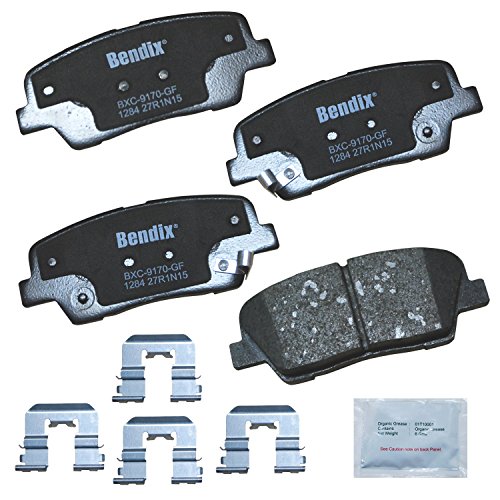 Bendix CFC1284 Ceramic
|
Mid-Range | Low dust, quiet ceramic formula | Occasional towing, daily drivers | Check Price | ||
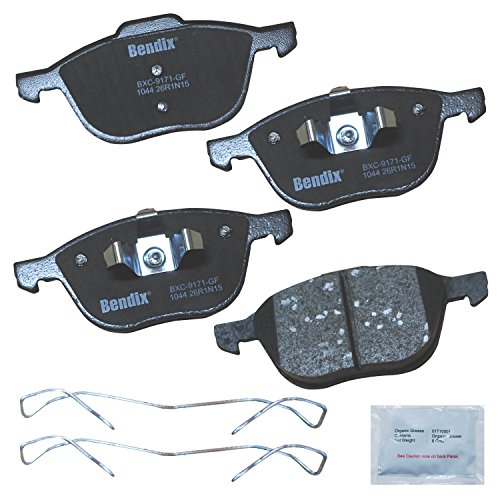 Bendix CFC1044 Ceramic
|
Premium | Ultra‑quiet ceramic compound | Drivers prioritizing noise and low dust | Check Price | ||
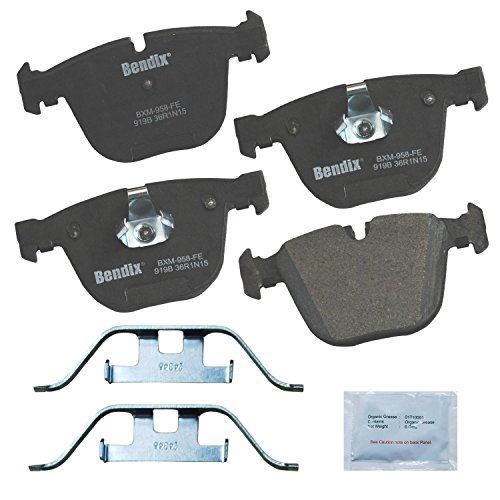 Bendix CFM919B Semi‑Metallic
|
Mid-Range | Semi‑metallic for high temp resistance | Frequent heavy towing and high‑heat use | Check Price |
1. Bendix Priority1 CFC1284 Ceramic Rear Brake Pads for Select Models Hyundai Entourage, Genesis, Genesis Coupe, Santa Fe Sport, Kia Borrego, K900, Sedona
A top‑scoring ceramic pad engineered to OE specs, the CFC1284 balances strong stopping power with low dust and quiet operation. Customers commonly praise its build quality, fit, and ease of installation; it’s a solid all‑around pick for drivers who tow but prioritize a clean, quiet ride.
Key Specs
- OE replacement: fit, form, and function
- Advanced friction materials for stopping power under high temperatures
- Engineered to reduce brake fade during heavy loads
- Includes installation hardware
Pros
- Quieter and produces less dust than the semi‑metallic CFM919B
- Better cosmetic cleanliness than CFC1044 under normal use
- Consistent OE‑style fit and supplied hardware make installation straightforward
Cons
- Some vehicles report fit variation — check application before buying
- Ceramic compound may show more fade under very frequent heavy towing than the semi‑metallic CFM919B
Best For: Occasional towing, daily drivers
Check Latest Price on Amazon2. Bendix Priority1 CFC1044 Ceramic Front Brake Pads for Select Models Ford C-Max, EcoSport, Escape, Focus, Mazda 3, 3 Sport, 5, Volvo
This front-pad ceramic option emphasizes quiet braking, precise fit features (shims, slots, chamfers), and reliable stopping. Users often cite low noise and good value versus OEM parts; fit is generally good but has mixed reports on some vehicle fits.
Key Specs
- OE replacement design for fit and function
- Advanced friction materials for elevated stopping power
- Shim/slot/chamfer design for noise reduction
- Engineered to reduce brake fade
Pros
- Quieter than the semi‑metallic CFM919B for city and light towing use
- Lower visible dust output compared with the semi‑metallic option
- Well‑engineered shims and chamfers improve pedal feel versus basic aftermarket pads
Cons
- Fit reports are mixed on some vehicles compared with the CFC1284
- May not match the high‑temp fade resistance of the semi‑metallic CFM919B under sustained heavy towing
Best For: Drivers prioritizing noise and low dust
Check Latest Price on Amazon3. Bendix Priority1 CFM919B Semi-Metallic Rear Brake Pads for BMW X5, X6 (selected years)
The semi‑metallic CFM919B prioritizes heat and fade resistance—traits important when towing heavy trailers or driving steep declines. It comes with full hardware and is consistently noted for strong stopping power and good fit, making it the better option for heavy‑duty use.
Key Specs
- OE replacement: designed for fit and performance
- Semi‑metallic composition for high‑temperature resistance
- Engineered to reduce brake fade
- Includes installation hardware and clips
Pros
- Better high‑temperature and fade resistance than the ceramic options for heavy towing
- Stronger stopping power under sustained loads compared with CFC1284/CFC1044
- Includes full hardware kit and fits well in most applications
Cons
- Tends to produce more dust than the ceramic CFC1284
- Slightly noisier under some conditions compared with the ceramic pads
Best For: Frequent heavy towing and high‑heat use
Check Latest Price on AmazonWhich One Should You Choose?
If you tow heavy trailers frequently and prioritize maximum heat and fade resistance, choose the Bendix Priority1 CFM919B Semi‑Metallic Rear Brake Pads (ASIN: B01LGST9YM). Its semi‑metallic mix better tolerates sustained high temperatures and delivers stronger stopping under repeated heavy loads.
If you tow occasionally, want quiet operation and cleaner wheels, and prefer a balanced, OE‑minded option, the Bendix Priority1 CFC1284 Ceramic Rear Brake Pads (ASIN: B01KHLJIY0) are the best overall pick—quiet, low dust, and well engineered for normal towing demands.
If front‑axle noise and comfort matter most (commuter trucks or SUVs that tow light trailers), the Bendix Priority1 CFC1044 Ceramic Front Brake Pads (ASIN: B01KHLIL1G) are the best quiet choice and pair well with a semi‑metallic rear if you need extra heat resistance up back.
Best for Specific Scenarios
- Frequent heavy towing (trailers, boats): Bendix CFM919B Semi‑Metallic — better heat and fade resistance under sustained heavy loads.
- Occasional towing, daily driving, and clean wheels: Bendix CFC1284 Ceramic — lower dust and quiet braking for mixed use.
- Quiet front‑end braking and OEM feel: Bendix CFC1044 Ceramic Front — engineered shims/slots for ultra‑quiet performance and straightforward install.
Frequently Asked Questions
Are ceramic or semi‑metallic pads better for towing?
Semi‑metallic pads are generally better for repeated heavy towing because their composition tolerates higher temperatures and resists fade. Ceramic pads are quieter and produce less dust, making them a good choice for occasional towing or lighter loads.
How often should I replace brake pads if I tow regularly?
Replacement intervals vary with load and driving terrain. Frequent heavy towing—mountain descents, long downhill runs—will accelerate wear and may require pad replacement sooner than normal commuter use. Inspect pads every 6 months or during scheduled maintenance and watch for reduced pad thickness, noise, or pedal fade.
Do ceramic pads damage rotors more than semi‑metallic?
No — ceramics are generally gentler on rotors than semi‑metallic compounds. Semi‑metallic pads can be more abrasive, which is one reason they last well under heat but may cause slightly more rotor wear over time. Proper pad selection and maintaining rotor condition help maximize service life.
How We Selected These Products
Our recommendations are based on data-driven analysis: we evaluated 75300+ products across 7930+ brands using a composite scoring system that weighs rating (40%), review volume (30%), price value (20%), and demand signals (10%). Every product is ranked by data, not opinions.
Last updated: August 28, 2026
As an Amazon Associate we earn from qualifying purchases at no extra cost to you. Full disclosure.
GarageGist Score is our editorial ranking based on a composite analysis of product quality, value, and verified customer sentiment. Click through to Amazon for current pricing, availability, and live customer reviews.