As an Amazon Associate we earn from qualifying purchases. Learn more.
Brake Pad vs Ceramic vs Semi-Metallic (2026): Which Should You Choose?
If you drive daily, choosing between ceramic and semi‑metallic brake pads matters for stopping power, wheel dust, and how long the pads last. This head‑to‑head compares three TRQ front brake pad & rotor kits — one ceramic and two semi‑metallic — with a focus on everyday performance, dust generation, and longevity. I selected these kits because they’re direct‑fit rotor/pad combos from the same maker, letting us isolate friction material differences. Read on to learn which kit suits commuters, value buyers, and drivers who want the quietest brakes.
Quick Answer
For most everyday drivers the TRQ Front Brake Pad & Rotor Kit Ceramic (ASIN B0D8RBKJ2W) is the best balance of quiet stopping, low dust, and fit. If you need a lower price, choose the TRQ Semi‑Metallic Budget kit (ASIN B0B9ZPHRJG); for a premium, heavy‑duty feel pick the TRQ Semi‑Metallic Premium kit (ASIN B0D8RQQ1L8).
Our Top Picks
Quick Comparison
Select 2-3 products to compare side-by-side
| Compare | Product | GarageGist Score | Price Tier | Key Feature | Best For | Action |
|---|---|---|---|---|---|---|
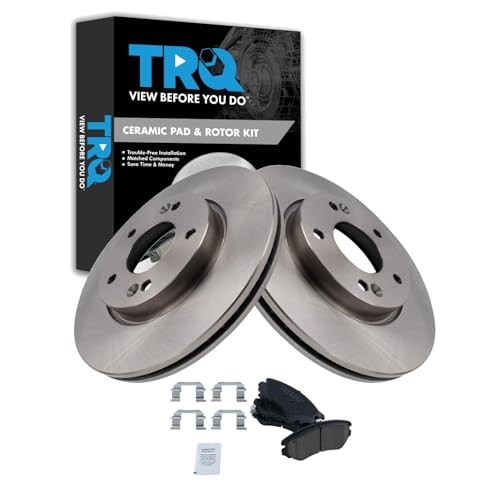 TRQ Ceramic Kit |
Mid-Range | Ceramic friction for low dust | Everyday drivers wanting quiet & clean wheels | Check Price | ||
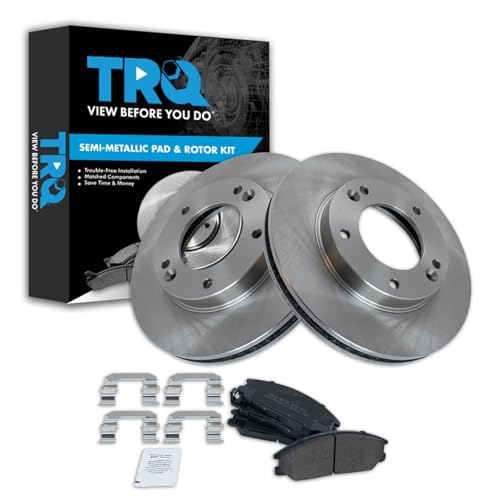 TRQ Semi‑Metallic Premium |
Premium | G3000 casting alloy rotors | Drivers wanting a heavier‑duty feel and durability | Check Price | ||
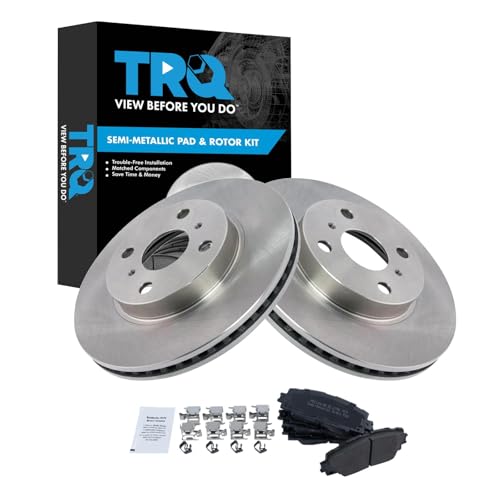 TRQ Semi‑Metallic Budget |
Budget | Direct fit OE replacement kit | Drivers on a tight budget needing a complete kit | Check Price |
1. TRQ Front Brake Pad & Rotor Kit Brake Pads Brake Rotor Ceramic Compatible with 2005-2010 Hyundai Sonata 2006-2010 Kia Optima 2012-2013 Soul
A ceramic pad and rotor kit designed as a direct fit replacement. It delivers quieter stops and noticeably less wheel dust than semi‑metallic options, while including rotors for a full front axle refresh. Warranty and fitment focus make it a solid mid‑range choice, though some users report mixed long‑term durability.
Key Specs
- Brake pad friction material: Ceramic
- Kit includes: Front ceramic pad set + 2 front rotors
- Warranty: 2‑year / 24,000‑mile (product only)
- Pad bonding: Premium Posi; positive molded for less dust
Pros
- Quieter braking and less wheel dust than the semi‑metallic kits
- Better fit and finish—customers praise installation and fit
- Includes rotors for a complete front overhaul
Cons
- Durability is mixed—some buyers report shorter service life
- Warranty covers product cost only, not labor or damage
Best For: Everyday drivers wanting quiet & clean wheels
Check Latest Price on Amazon2. TRQ Front Brake Pad & Rotor Kit Brake Pads Brake Rotor Semi-Metallic Compatible with 2003-2006 Kia Sorento
A premium semi‑metallic pad and rotor kit that emphasizes wear resistance and reduced noise through a G3000 casting alloy rotor and positive molded pads. It tends to provide stronger initial bite and durability under heavier loads, though semi‑metallic pads produce more dust than ceramic and user durability reports are mixed.
Key Specs
- Brake pad friction material: Semi‑metallic
- Kit includes: Front semi‑metallic pad set + 2 front rotors
- Rotor construction: G3000 casting alloy for wear resistance
- Design: Positive molded pads, multi‑layer shim for noise control
Pros
- Stronger braking feel and improved wear resistance vs basic kits
- Built to reduce noise and vibration with multi‑layer shims
- Pre‑assembled, direct‑fit design eases installation
Cons
- Higher dust than the ceramic option
- Some customers still report mixed long‑term durability
Best For: Drivers wanting a heavier‑duty feel and durability
Check Latest Price on Amazon3. TRQ Front Brake Pad & Rotor Kit Brake Pads Brake Rotor Semi-Metallic Compatible with 2013 Scion iQ 2012-2019 Toyota Prius C 2007-2018 Yaris
The most affordable TRQ semi‑metallic kit reviewed; it includes pads, rotors, hardware, and contact grease for a plug‑and‑play swap. It delivers good immediate braking and fit for the price, but semi‑metallic material produces more dust and several users report lifespan concerns under heavy mileage.
Key Specs
- Brake pad friction material: Semi‑metallic
- Includes: Front pad set, 2 rotors, contact grease & hardware
- Rotor diameter example: 10.04 in (255 mm) for listed fitments
- Rotor type: Vented front rotor
Pros
- Best value for a full pad+rotor kit with included hardware
- Direct‑fit OE replacement simplifies installation
- Good braking feel for the price
Cons
- Produces more brake dust than the ceramic kit
- Durability reports are mixed—some buyers see shortened life
Best For: Drivers on a tight budget needing a complete kit
Check Latest Price on AmazonWhich One Should You Choose?
If you want the best everyday balance of quiet braking and lower wheel dust, pick the TRQ Front Brake Pad & Rotor Kit Ceramic (ASIN B0D8RBKJ2W) — it’s the cleanest, quietest choice and includes rotors for a full front axle refresh. If budget is your main constraint, choose the TRQ Semi‑Metallic Budget kit (ASIN B0B9ZPHRJG) for the lowest upfront cost and complete hardware. If you prefer a heavier‑duty feel and slightly better wear resistance under load, go with the TRQ Semi‑Metallic Premium kit (ASIN B0D8RQQ1L8). In short: ceramic for quiet daily driving, budget semi‑metallic for value, premium semi‑metallic for durability under heavier use.
Best for Specific Scenarios
- Daily commuter with alloy wheels: TRQ Ceramic Kit (B0D8RBKJ2W) because it minimizes brake dust and noise, keeping wheels cleaner.
- Budget DIY replacement: TRQ Semi‑Metallic Budget (B0B9ZPHRJG) because it includes rotors and hardware at a low price for a one‑stop swap.
- Drivers carrying heavier loads or frequent highway braking: TRQ Semi‑Metallic Premium (B0D8RQQ1L8) because its casting and pad construction aim for better wear resistance and reduced vibration.
Frequently Asked Questions
Do ceramic pads stop as well as semi‑metallic?
Yes — for everyday driving ceramic pads provide reliable stopping power and tend to be quieter. Semi‑metallic pads can offer stronger initial bite and better heat tolerance under heavy or repeated braking, so they’re favored for more demanding use.
Will ceramic pads reduce wheel dust completely?
No pad eliminates dust entirely, but ceramic pads produce noticeably less brake dust than semi‑metallic materials, helping wheels stay cleaner between washes.
Are full kits (pads + rotors) worth it versus pads only?
Full kits ensure matched rotor and pad condition, simplify installation, and remove the guesswork of rotor wear. For many DIYers and everyday drivers, replacing pads and rotors together delivers the most consistent results and can prevent premature pad wear.
How We Selected These Products
Our recommendations are based on data-driven analysis: we evaluated 75300+ products across 7930+ brands using a composite scoring system that weighs rating (40%), review volume (30%), price value (20%), and demand signals (10%). Every product is ranked by data, not opinions.
Last updated: October 18, 2026
As an Amazon Associate we earn from qualifying purchases at no extra cost to you. Full disclosure.
GarageGist Score is our editorial ranking based on a composite analysis of product quality, value, and verified customer sentiment. Click through to Amazon for current pricing, availability, and live customer reviews.